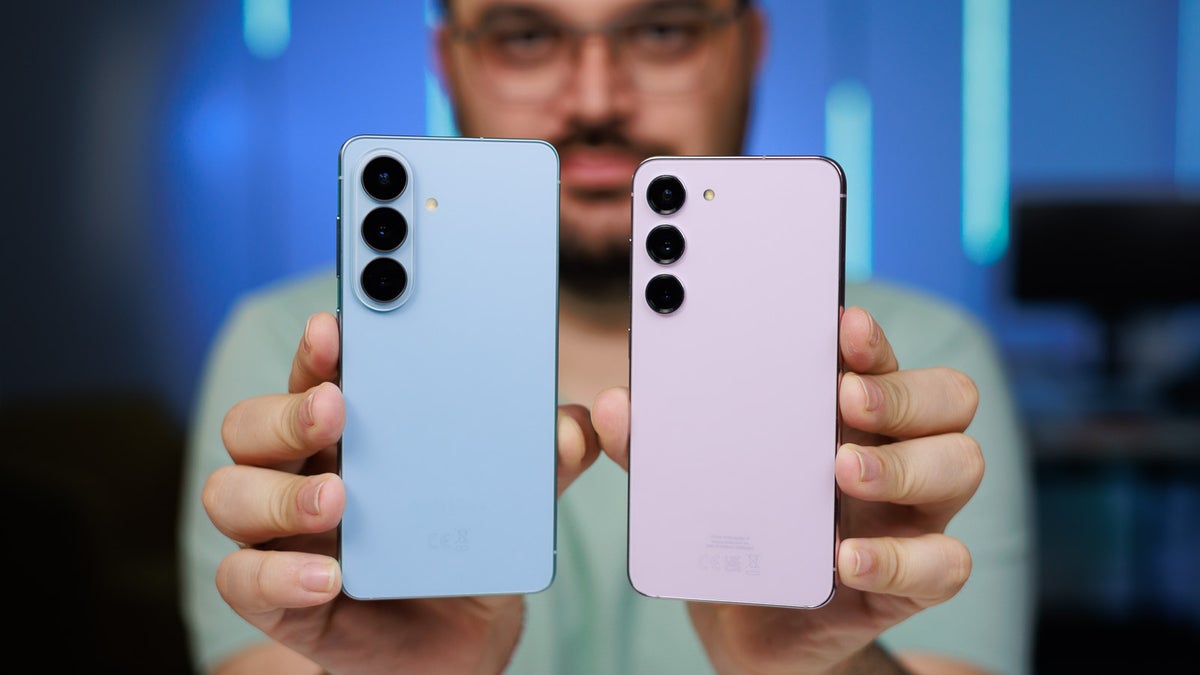
| Galaxy S26 | Galaxy S23 |
|---|---|
| Similar design, slightly different camera housing | Small and compact, separate cutouts for the rear cameras |
| Faster Qualcomm Snapdragon 8 Elite Gen 5 chipset | Three generations old Snapdragon 8 Gen 2 chip |
| Bigger 6.3-inch display | 6.1-inch screen, more compact phone |
| 12GB of RAM, 4GB more than the S23 | 8GB of RAM on all memory configurations |
| The same camera system for yet another year | 50MP main, 12MP ultrawide, 10MP telephoto cameras |
| Bigger 4,300 mAh battery | Slightly smaller 3,900 mAh battery |
| Same wired and wireless charging speeds | 25W wired, 15W wireless charging |
Table of Contents:
Also read:
Design and Size
Last of the 6.1-inchers
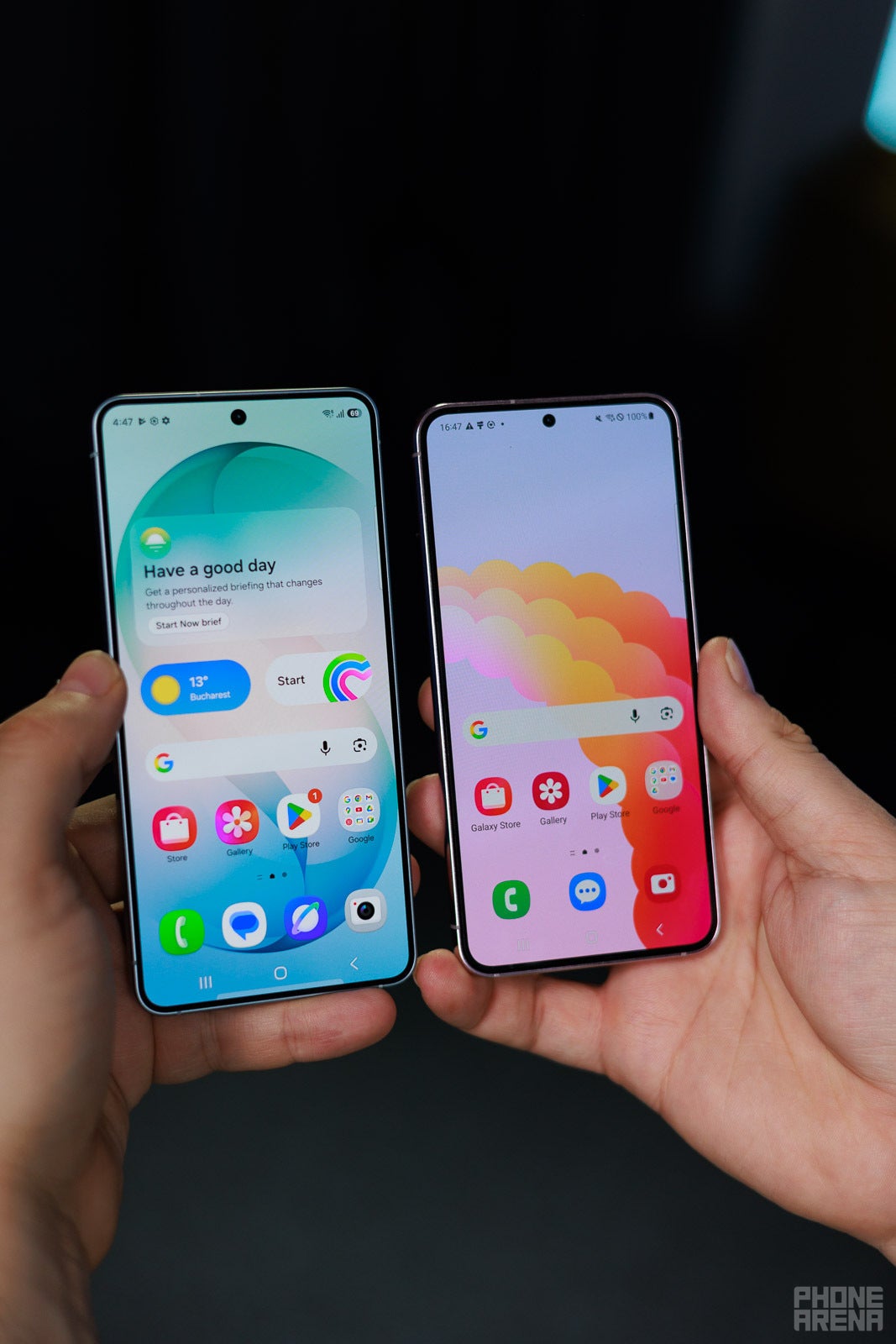

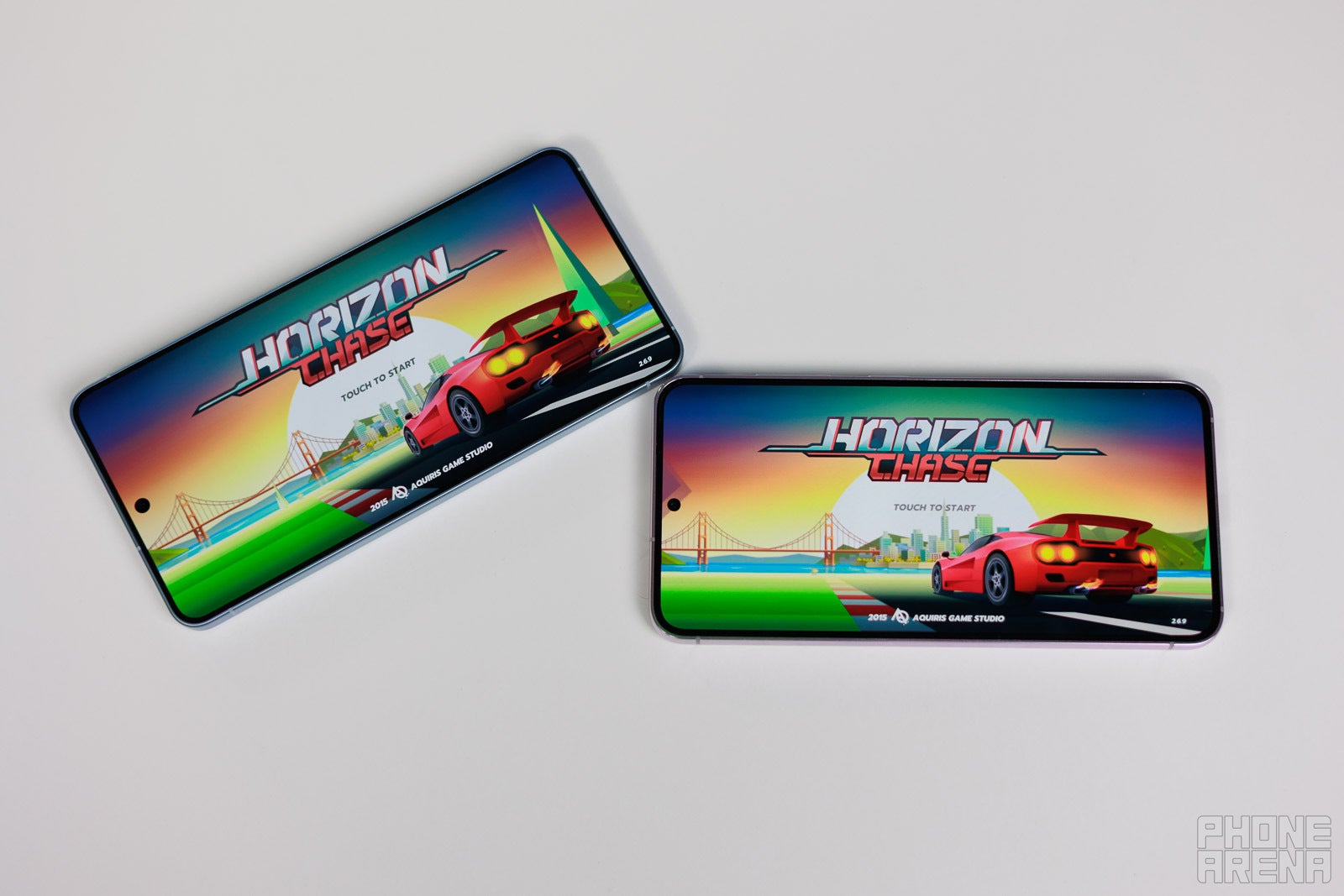
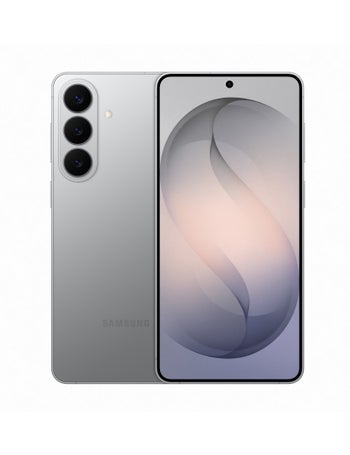
The new Galaxy S26, on the other hand, stretches its display diagonally to 6.3 inches and swaps the camera cutouts for a pill-shaped camera housing, not that dissimilar to the Xperia phones of the past couple of years. Camera bump aside, the new phone looks very similar to the older generations, following the same design language Samsung has been peddling for the past couple of years.
The bigger screen brings a bigger size as well, but in this case, it seems that the Galaxy S26 is actually be lighter than the S23. Granted, by just one gram, but given the bigger screen and battery, it’s impressive that Samsung has managed to pull this off.
| Galaxy S26 | Galaxy S23 |
|---|---|
| Thickness 7.2 mm |
Thickness 7.6 mm |
| Dimensions 149.6 x 71.7 |
Dimensions 146.3 x 70.9 |
| Weight 167 grams |
Weight 168 grams |
The anti-reflective coating of the Galaxy Ultra models of the past two years has caught a lot of attention (even Apple tried one on the latest iPhone 17 series), but it’s not present on the S26, it’s still reserved for the Ultra model.
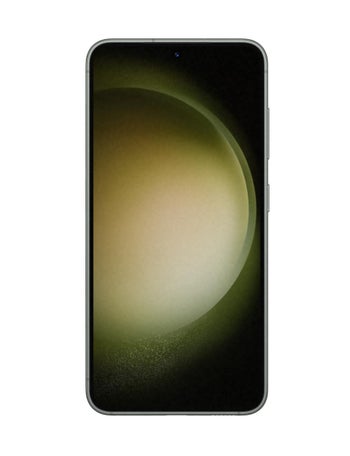
In term of colors, the S26 is available in Black, White, Cobalt Violet, and Sky Blue with two exclusive colors available via the Samsung Store – Pink Gold and Silver Shadow. The Galaxy S23, on the other hand, comes in Phantom Black, Cream, Green, Lavender, Graphite, and Lime.
Display Differences
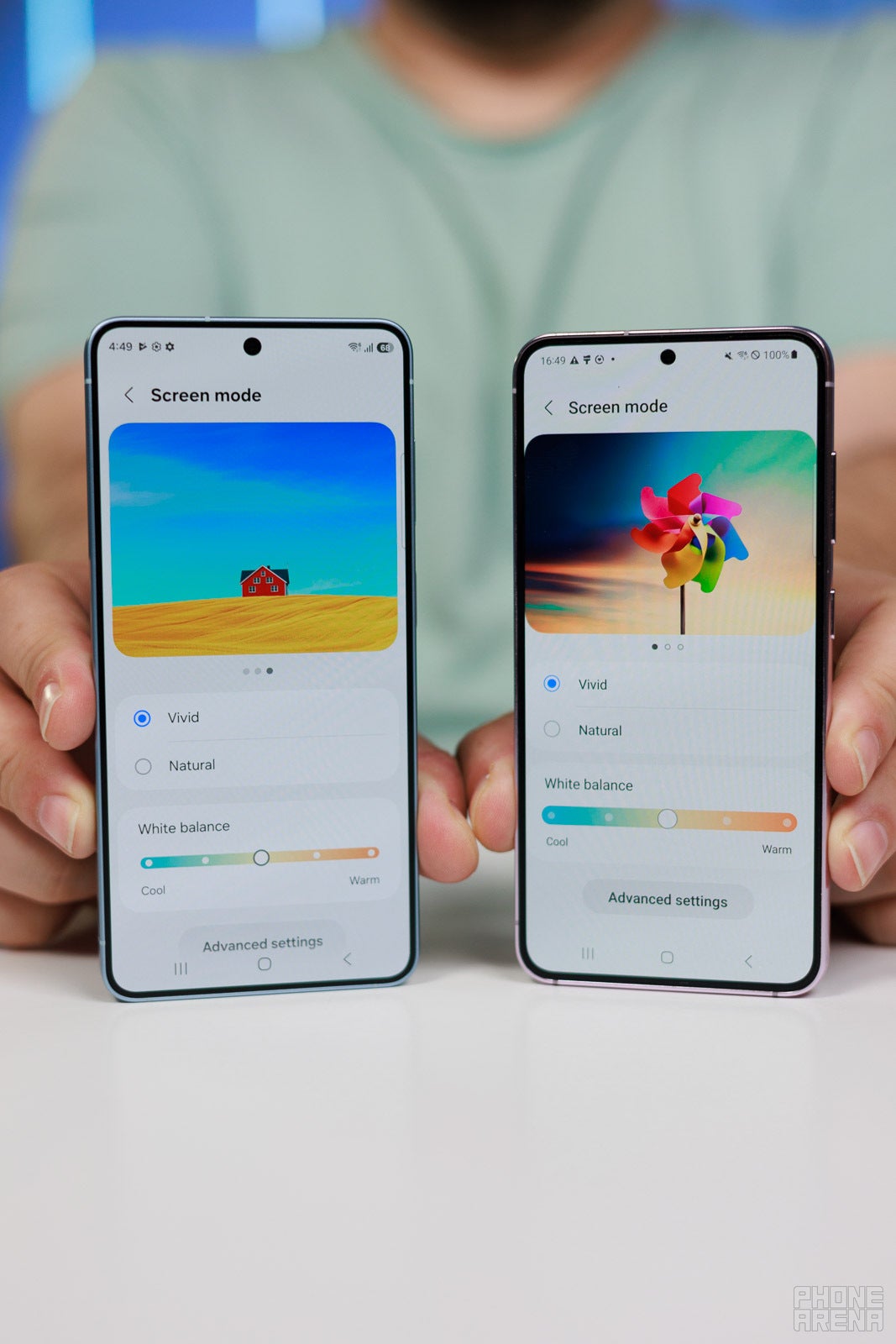
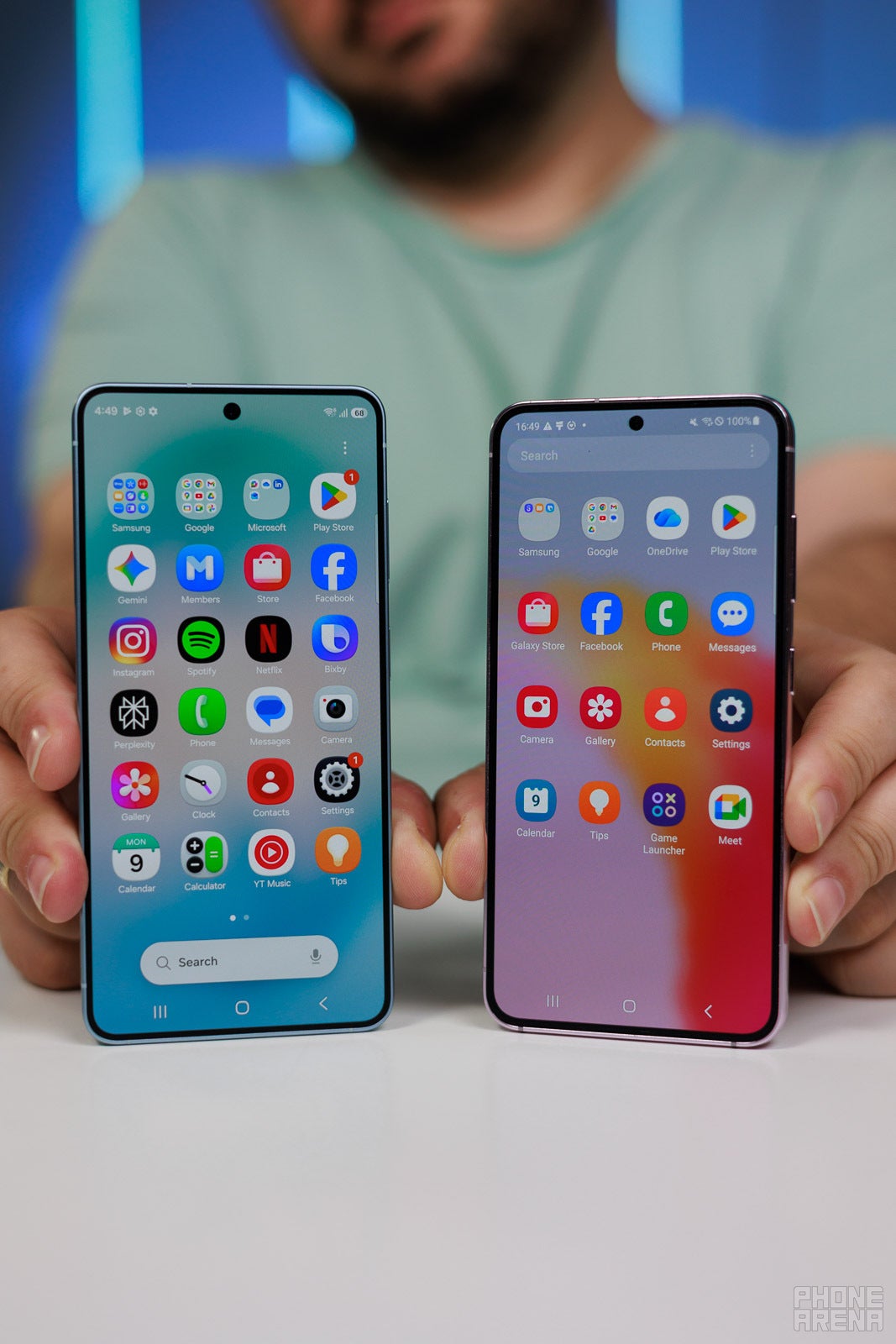
Speaking of brightness, the S23 is listed with “only” 1750 nits of peak brightness, and in our display test the phone managed around 1000 nits at 100% APL, still quite an impressive result. Scroll down to see the display benchmarks of the new model and how does it stack up against the quite old S23.
The resolution remains unchanged on the new model, and given the S23’s display is smaller, the 1080 x 2340 pixel resolution results in a slightly higher pixel density of 425 PPI on the old model, compared to the 411 PPI on the Galaxy S26.
| Galaxy S26 | Galaxy S23 |
|---|---|
| Size 6.3″ |
Size 6.1″ |
| Brightness 2600 nits (peak) |
Brightness 1750 nits (peak) |
Looking at the benchmarks above, it’s clear to see that Samsung has bumped up not only the size of the S26‘s display but also its brightness. The new model outshines the S23 by almost 1,000 nits which is expected but still impressive. Leaving the brightness figures aside, the other metrics are quite similar.
The biometrics are also the same in these two — the S26 sports the same ultrasonic fingerprint scanner as the one found on the previous couple of generations. This tech has been working quite well ever since Samsung introduced it, so there’s no need for a change there.
Performance and Software
Cream of the crop
This silicon is a mouthful, but Qualcomm has decided to keep the Elite moniker from last year and at the same time continue with the “Gen” nomenclature. It’s a powerhouse of a chip, with benchmarks showing around 3800 points in Geekbench single-core, while the multi-core performance is even more impressive at 12400 points. The Exynos 2600 should be pretty close, and given it’s made using Samsung’s 2nm tech, it could even be more efficient.
Now, the Galaxy S23 is no slouch either, but it does feature quite an old chipset, the Snapdragon 8 Gen 2. Synthetic benchmarks put it at around 1600 points in the Geekbench single-core test and 5000 points in the multi-core benchmark. It’s more than twice as slow, at least on paper. Let’s see the cold hard numbers.
| Galaxy S26 | Galaxy S23 |
|---|---|
| Chip Qualcomm Snapdragon 8 Elite Gen 5 Exynos 2600 |
Chip Qualcomm Snapdragon 8 Gen 2 |
| Process 3nm 2nm |
Process 4nm |
| RAM, Storage 12/256GB 12/512GB LPDDR5X RAM |
RAM, Storage 8/128GB 8/256GB 8/512GB LPDDR5X RAM |
If we look a the sheer numbers, the gap is huge. The new Galaxy S26 scores two times the result of the S23 in some tests. And even though the difference is smaller in single-core performance, it’s still pretty big. In real life, you can’t say the S26 is twice as fast, but you can feel the new chipset making the phone much snappier and smooth.
The new Galaxy S26 features the same 12GB of RAM as the previous generation, but it’s still 4GB more than what the Galaxy S23 has on board. In terms of storage, the S26 now starts at 256GB but don’t start to celebrate yet, as the starting price is higher as well.
Camera
No upgrades once again
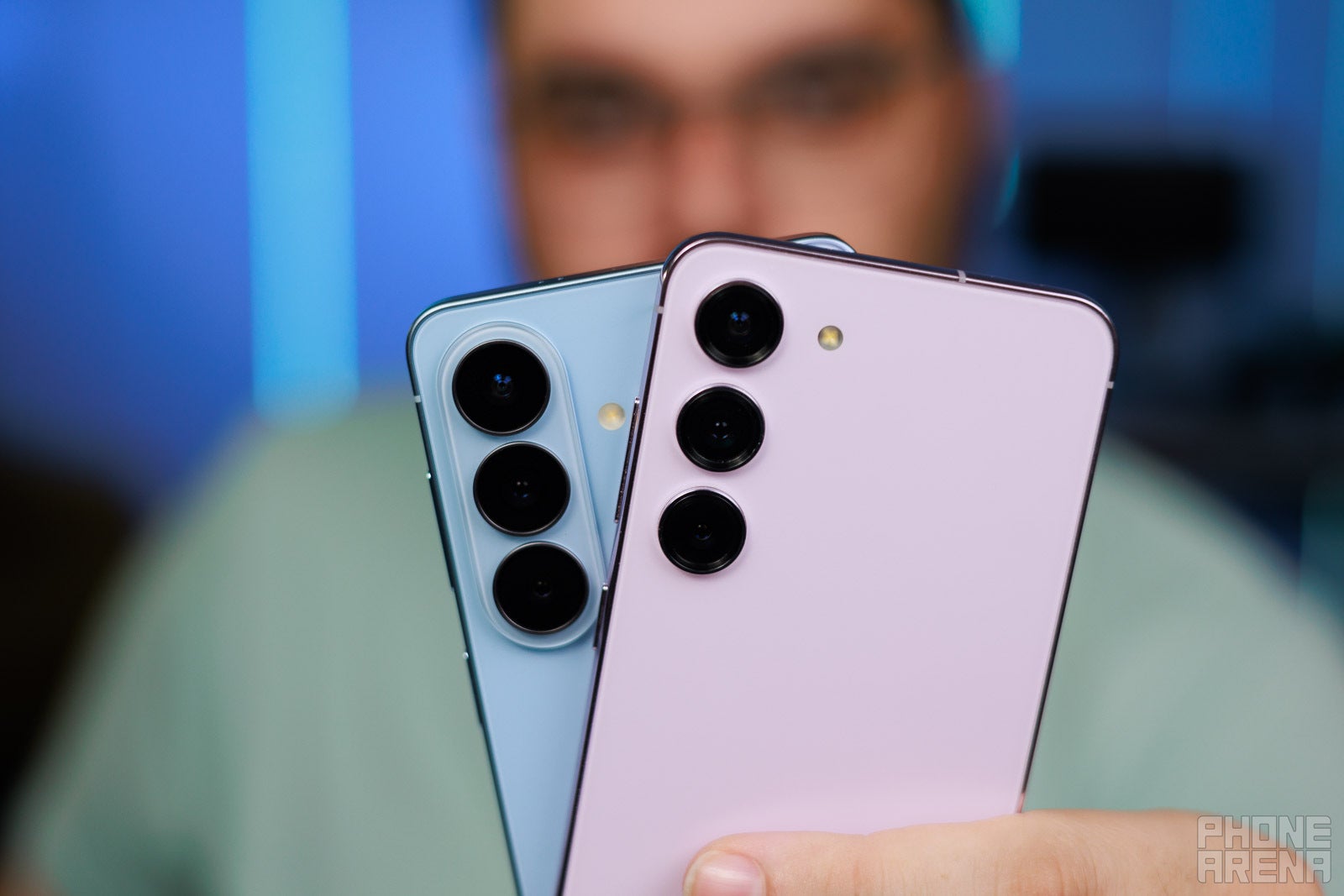
This is disappointing. Samsung has decided to use the same camera system on the Galaxy S26 as the one used on the previous couple of generations. For fourth consecutive year the vanilla Galaxy flagship comes with the same triple camera on its back.
We’re talking about a 50MP main camera with an aperture of f/1.8 over a 1/1.56″ sensor, a 12MP ultrawide and a 10MP telephoto with 3x optical zoom. The selfie camera is also identical on these two phones.
|
|
| Samsung Galaxy S26 | Samsung Galaxy S23 |
| Main camera | |
|---|---|
| 50 MP (OIS, PDAF) Sensor name: Samsung GN3 Aperture size: F1.8 Focal length: 24 mm Sensor size: 1/1.56″ Pixel size: 1.0 μm |
50 MP (OIS, PDAF) Sensor name: Samsung ISOCELL Aperture size: F1.8 Focal length: 23 mm Sensor size: 1/1.56″ Pixel size: 1.0 μm |
| Second camera | |
| 12 MP (Ultra-wide) Sensor name: Sony IMX564 Aperture size: F2.2 Focal Length: 13 mm Sensor size: 1/2.55″ Pixel size: 1.4 μm |
12 MP (Ultra-wide) Sensor name: Sony IMX564 Aperture size: F2.2 Focal Length: 13 mm Sensor size: 1/2.55″ Pixel size: 1.4 μm |
| Third camera | |
| 10 MP (Telephoto, OIS, PDAF) Sensor name: Samsung S5K3K1 Optical zoom: 3.0x Aperture size: F2.4 Focal Length: 67 mm Sensor size: 1/3.94″ Pixel size: 1 μm |
12 MP (Telephoto, OIS) Sensor name: Samsung S5K3K1 Optical zoom: 3.0x Aperture size: F2.4 Focal Length: 64 mm Sensor size: 1/3.94″ Pixel size: 1.0 μm |
| Front | |
| 12 MP (HDR) | 12 MP |
Samsung Galaxy S26 vs Samsung Galaxy S23 specs comparison
or compare them to other phones using our
Phone Comparison tool
The Galaxy S23 scored 137 (out of 158) in our composite camera benchmark, so there’s a huge potential for improvement. The S26, on the other hand, is unsurprisingly 12 points up and up in every category. Let’s see how this translates to real-life samples.
Main Camera
Software algorithms seem to help, as the new S26 produces more pleasant samples, in our opinion. The Galaxy S23 shots are sharper but in a bit unnatural way, courtesy of Samsung’s oversharpening algorithms.
Both phones resolve enough details, but the daylight samples from the S23 look overexposed and too sharp, once again. Let’s take a look at the zoom photos.
Zoom
Telephoto samples look very similar, but there are some differences nevertheless. The color tonality and the white balance are different – a little bit colder on the S23, while the S26 produces warmer closeups.
The differences from the main camera have found their way to the telephoto as well. The S23 samples are a bit overexposed and too sharp, to the point some of the details in the background look grainy.
Ultra-wide
The ultrawide samples are almost identical in broad daylight, with the slightly warmer tint of the S26 showing once again. In low-light, the S23 produces clearer and sharper photos, albeit a little unnatural. The S26 low-light samples look way softer and even though they’re also a bit darker, they look more natural and organic.
Selfie
The selfie shots are somewhat different, mainly in the framing. Even though both phones feature the same 26 mm wide selfie snapper, the Galaxy S26 somehow places the objects farther away in the frame.
Battery Life and Charging
400 mAh might not be enough
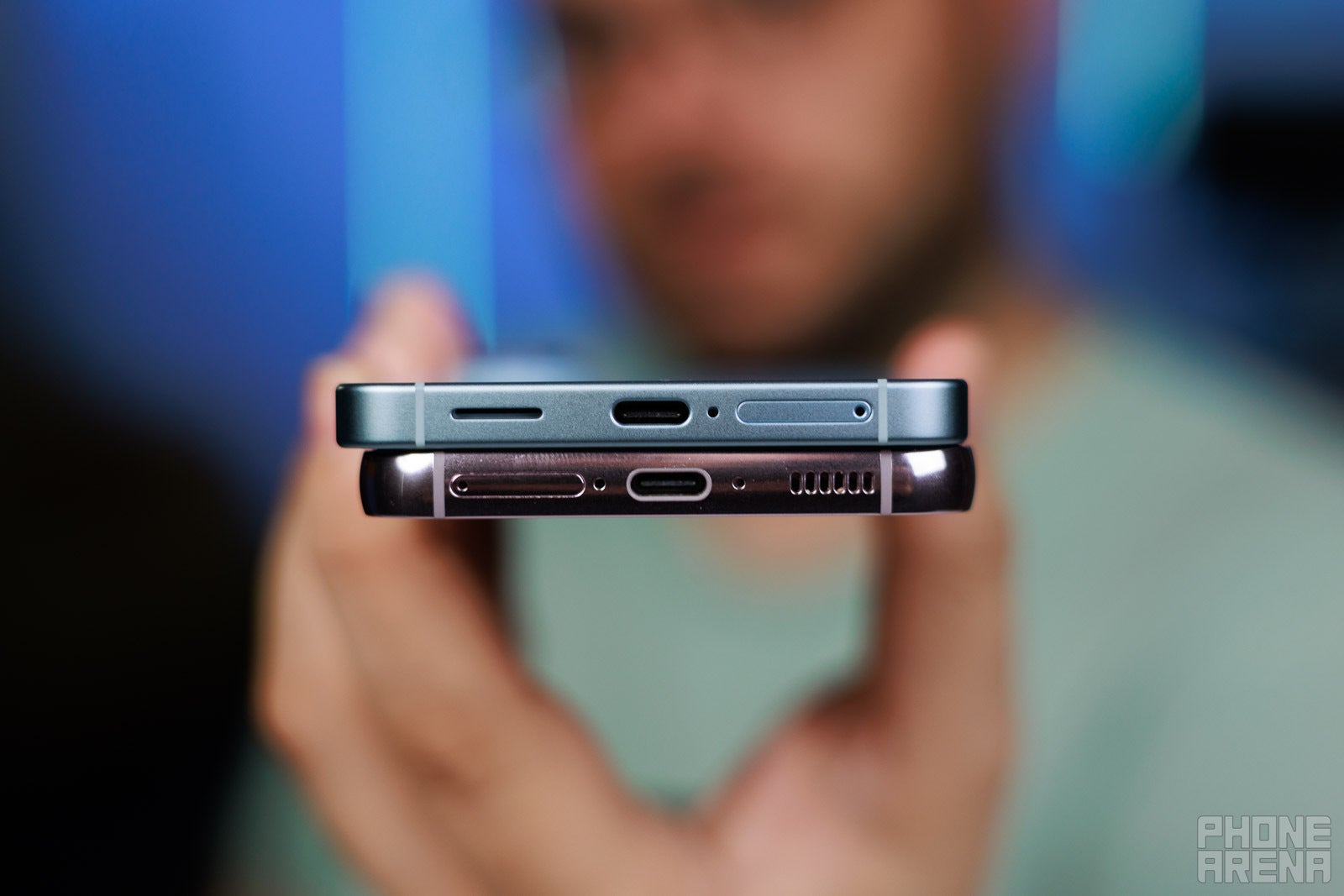
There’s a slight battery upgrade on the Galaxy S26 compared to the past couple of generations – а 4,300 mAh cell inside. It’s nothing radical, just 400 mAh on top of the 3,900 mAh battery that the Galaxy S23 has on board, and 300 mAh more than the previous two models.
That may or may not translate into battery life, but we hope it does, because the S23 managed just over 6 hours in our battery test, and that’s out of the top 100 phones tested in the past 2 years. Let’s move to the battery benchmarks.
| Galaxy S26 | Galaxy S23 |
|---|---|
| Battery size 4,300 mAh |
Battery size 3,900 mAh |
|
Charging speeds 15W wireless charging USB-C 2.0 |
Charging speeds 25W wired 15W wireless charging USB-C 2.0 |
PhoneArena Battery and Charging Test Results:
The 400 mAh difference in favor of the S26 translates into about 30 minutes more in total battery life. The gains can be found in all three parts of our test, and this result will translate into a better real-life battery life on the S26.
Charging also remains unchanged for yet another year. It’s disappointing when we get 100W phones that charge for half an hour but it is what it is.
The Galaxy S26 features 25W wired charging and 15W wireless and Samsung cites 0-55% in 30 minutes. For comparison, the Galaxy S23 supports 25W of wired charging power and fills its battery from zero to full in 1 hour and 8 minutes. Given the larger battery inside the S26, the 1:16 charging time from zero to full is unsurprising.
Specs Comparison
|
|
|
| Samsung Galaxy S26 | Samsung Galaxy S23 |
| Dimensions | |
|---|---|
| 149.6 x 71.7 x 7.2 mm (~10 mm with camera bump) | 146.3 x 70.9 x 7.6mm (~9.02 mm with camera bump) |
| Weight | |
| 167.0 g | 168.0 g |
| Size | |
|---|---|
| 6.3-inch | 6.1-inch |
| Type | |
| Dynamic AMOLED, 120Hz | Super AMOLED, 120Hz |
| System chip | |
|---|---|
| Snapdragon 8 Elite Gen 5 SM8850-AC (3 nm) International version – Exynos 2600 |
Snapdragon 8 Gen 2 SM8550-AC (4 nm) |
| Memory | |
| 12GB (LPDDR5X)/256GB (UFS 4.0) 12GB/512GB |
8GB (LPDDR5X)/128GB (UFS 4.0) 8GB/256GB |
| OS | |
| Android (16), up to 7 OS updates | Android (14, 13) |
| Type | |
|---|---|
| 4300 mAh | 3900 mAh |
| Charge speed | |
| Wired: 25.0W Wireless: 15.0W |
Wired: 25.0W Wireless: 10.0W |
| Main camera | |
|---|---|
| 50 MP (OIS, PDAF) Sensor name: Samsung GN3 Aperture size: F1.8 Focal length: 24 mm Sensor size: 1/1.56″ Pixel size: 1.0 μm |
50 MP (OIS, PDAF) Sensor name: Samsung ISOCELL Aperture size: F1.8 Focal length: 23 mm Sensor size: 1/1.56″ Pixel size: 1.0 μm |
| Second camera | |
| 12 MP (Ultra-wide) Sensor name: Sony IMX564 Aperture size: F2.2 Focal Length: 13 mm Sensor size: 1/2.55″ Pixel size: 1.4 μm |
12 MP (Ultra-wide) Sensor name: Sony IMX564 Aperture size: F2.2 Focal Length: 13 mm Sensor size: 1/2.55″ Pixel size: 1.4 μm |
| Third camera | |
| 10 MP (Telephoto, OIS, PDAF) Sensor name: Samsung S5K3K1 Optical zoom: 3.0x Aperture size: F2.4 Focal Length: 67 mm Sensor size: 1/3.94″ Pixel size: 1 μm |
12 MP (Telephoto, OIS) Sensor name: Samsung S5K3K1 Optical zoom: 3.0x Aperture size: F2.4 Focal Length: 64 mm Sensor size: 1/3.94″ Pixel size: 1.0 μm |
| Front | |
| 12 MP (HDR) | 12 MP |
| Bluetooth | |
|---|---|
| 6.0 | 5.3 |
| WLAN | |
| Wi-Fi 6,Wi-Fi 6E,Wi-Fi 7 Wi-Fi Direct, Hotspot 802.11 a, b, g, n, ac, ax |
a,b,g,n,ac,Wi-Fi 6,Wi-Fi 6E Wi-Fi Direct, Hotspot 802.11 a, b, g, n, ac, ax |
| USB | |
| Type-C, USB 3.2 | Type-C |
| Sensors | |
| Accelerometer, Gyroscope, Compass, Barometer, Ambient light sensor, Proximity sensor | Accelerometer, Gyroscope, Compass, Ambient light sensor, Proximity sensor |
| Hearing aid compatible | |
| M3/T4 | |
| Location | |
| GPS, A-GPS, Glonass, Galileo, BeiDou, Cell ID, Wi-Fi positioning | GPS, A-GPS, Glonass, Galileo, BeiDou, Cell ID, Wi-Fi positioning |
| Other | |
| NFC, Ultra Wideband (UWB) | NFC, Ultra Wideband (UWB) |
Samsung Galaxy S26 vs Samsung Galaxy S23 specs comparison
or compare them to other phones using our
Phone Comparison tool
Summary
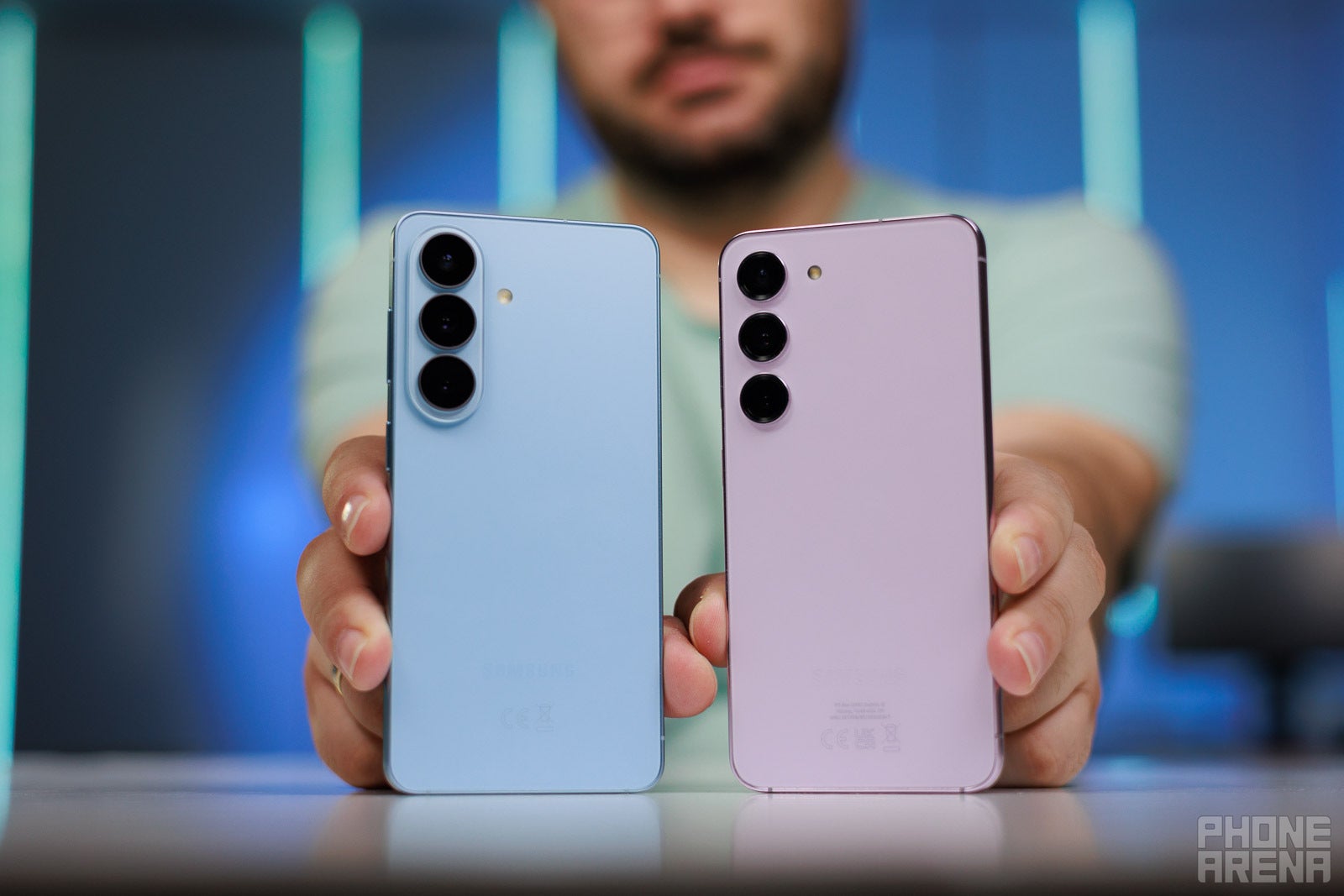
The Galaxy S26 is an incremental upgrade compared to the past two generations, but if we go all the way back to the Galaxy S23, the differences become substantial. The S26 comes equipped with a much faster processor, a bigger battery, a bigger and brighter screen, and longer software support.
The base storage is now 256GB but the starting price has also creeped up at $899. If you’re coming from the Galaxy S23, maybe it’s time to think about an upgrade, as that phone will receive its last software update next year.
👇Follow more 👇
👉 bdphone.com
👉 ultractivation.com
👉 trainingreferral.com
👉 shaplafood.com
👉 bangladeshi.help
👉 www.forexdhaka.com
👉 uncommunication.com
👉 ultra-sim.com
👉 forexdhaka.com
👉 ultrafxfund.com
👉 bdphoneonline.com
👉 dailyadvice.us