
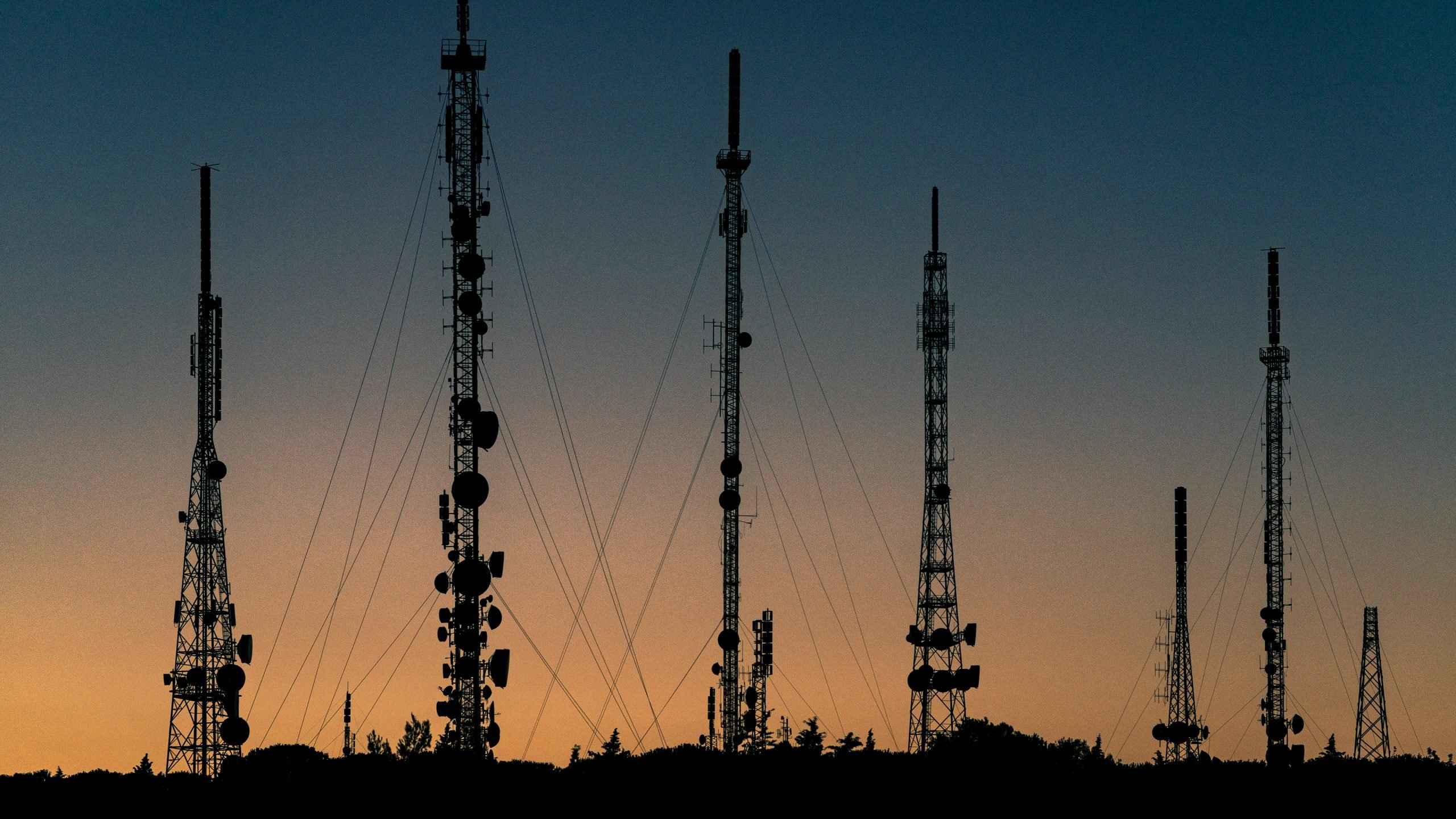
Every mobile call and download passes through the radio access network: the towers, antennas and base stations that connect a phone to everything beyond it. It is also the part of the telecom industry where spending has been stuck for two years. So the pitch now gaining traction is an appealing one: fold artificial intelligence into that layer, and operators finally have a reason to open their wallets again.
The trouble is that the economics underlying the story have not improved to match the enthusiasm, and the industry’s own numbers keep showing as much. Start with the company that sells more of this equipment than almost anyone. Ericsson reported second-quarter results on July 14 showing sales of 52.7 billion Swedish kronor, down 1% on an organic basis, with the radio access network market it depends on still going nowhere. Adjusted gross margin actually improved, to 48.4%, on the back of cost discipline and a better software mix.
But chief executive Börje Ekholm, who handed the role to networks head Per Narvinger in October, told investors to keep planning for what he called a flattish market while customers weigh up demand for AI-driven applications. Chief financial officer Lars Sandström was blunt on the cost side, saying input costs rose further in the quarter and that the financial hit from component inflation, semiconductors especially, would build gradually over the coming quarters.
That is the real backdrop to the AI-RAN conversation. The radio market is not collapsing, but it is not growing either, and the cost of the silicon used in base stations is climbing. AI-RAN arrives into that squeeze asking operators to spend more, not less.
What AI-RAN actually promises, and what it costs
The term covers a spectrum. At the modest end, AI is used to run existing networks better: predicting faults, cutting energy use, planning capacity, automating the grunt work of operations. At the ambitious end sits the vision that Nvidia has pushed hardest since helping launch the AI-RAN Alliance in 2024, which is to put graphics processing units into the network itself, so the same hardware can run radio functions and sell spare capacity as AI compute.
The modest end is already delivering. Finland’s Elisa, which has built a digital twin of its network and set agentic AI to work alongside human engineers to troubleshoot and predict faults, says the approach has cut network incidents by more than 80%. That is a concrete operational saving, available now, and it leans on software rather than a wholesale swap-out of physical radio equipment.
The ambitious end is where the economics get shaky. Putting GPUs at the cell site raises both the upfront capital bill and the running costs, and operators have been openly cautious about whether the sums work. Some analysts argue that cheaper silicon, including increasingly capable general-purpose processors, would be good enough for many radio workloads without the premium or the dependency that comes with specialised AI chips. For an industry already absorbing component inflation, “spend more on Nvidia hardware and hope the compute-rental business materialises” is a difficult internal sell.
The dependency question nobody has answered
This is the tension the hype tends to skip. The most expansive version of AI-RAN does not just add cost; it deepens reliance on a single dominant chip supplier at exactly the moment telecom operators, and the governments behind them, are trying to reduce strategic dependencies rather than add new ones.
Washington has put money behind the question. On July 14, the US National Telecommunications and Information Administration opened applications for up to US$53 million to develop, test and commercialise what it calls secure, American-led AI-native RAN, the fourth funding round under a programme originally built to seed open radio networks that could rival Chinese vendors. The conditions attached are revealing. The money targets a trusted, exportable American technology stack, and NTIA administrator Arielle Roth said the demonstrations are meant to give providers, investors and international partners the evidence they need to adopt the technology, an acknowledgement, in effect, that the evidence is not yet in.
Momentum is real all the same. Vendors are shipping the software-led features that make up the sensible end of AI-RAN, operators from Europe to Asia are running live trials, and the direction of travel toward more automated, AI-assisted networks is not seriously in doubt. Ericsson itself frames AI-driven traffic growth as the catalyst for the next investment cycle, and it may well be right that the cycle is coming.
A cycle worth timing carefully
The honest read is that AI-RAN is two stories wearing one label. One is a near-term efficiency play, already banking savings for operators like Elisa, built mostly on software and unlikely to upset anyone’s budget. The other is a longer-term, capital-heavy bet on GPUs in the network that has to clear real hurdles on cost, on proof of a compute-rental business, and on whether operators want to trade one dependency for another.
Conflating the two is how hype outruns reality. Ekholm’s flattish market and Sandström’s rising input costs are not the language of an industry about to be rescued by a new technology next quarter. They describe a sector doing the unglamorous work of protecting margins while it waits to see which version of AI-RAN pays for itself. The operators writing the checks already seem to know the difference. The pitch, for now, is running well ahead of the payback.
See also: T-Mobile and Ericsson test AI-RAN on live 5G Advanced network
Want to learn more about the IoT from industry leaders? Check out IoT Tech Expo taking place in Amsterdam, California, and London. The comprehensive event is part of TechEx and is co-located with other leading technology events including AI & Big Data Expo and the Cyber Security Expo. Click here for more information.
Telecoms is powered by TechForge Media. Explore other upcoming enterprise technology events and webinars here.
👇Follow more 👇
👉 bdphone.com
👉 ultractivation.com
👉 trainingreferral.com
👉 shaplafood.com
👉 bangladeshi.help
👉 www.forexdhaka.com
👉 uncommunication.com
👉 ultra-sim.com
👉 forexdhaka.com
👉 ultrafxfund.com
👉 bdphoneonline.com
👉 dailyadvice.us