
European satellite operator OQ Technology and Telefónica Germany are preparing to test direct-to-device satellite connectivity on ordinary smartphones, in what the partners bill as the first two-way demonstration of its kind by a European satellite company.
The trial, set for the northern German state of Mecklenburg-Western Pomerania, will carry messaging and voice services from low Earth orbit to standard, unmodified handsets such as iPhones and Android phones, using Telefónica’s own licensed mobile spectrum.
Direct-to-device, or D2D, lets a normal phone link to a passing satellite when no cell tower is in range, with no special hardware or bolt-on antenna. The draw is coverage that reaches the gaps terrestrial networks leave behind, from rural blackspots to disaster zones where the ground infrastructure is down or too costly to build.
What sets this direct-to-device satellite test apart
The detail that makes the trial notable is the spectrum. Rather than lean on OQ’s own dedicated satellite frequencies, the demonstration runs on Telefónica’s licensed mobile spectrum, so the satellite behaves like an extension of the operator’s network rather than a separate service sitting alongside it.
OQ’s in-house payload is built to 3GPP mobile standards and works across several bands, including the S-band and the IMT frequencies that terrestrial operators already use. Its satellites orbit at roughly 500 to 600 kilometres, low enough to keep the lag manageable for texts and basic voice.
“Europe must develop its own sovereign and interoperable space-based mobile infrastructure,” said Omar Qaise, OQ Technology’s founder and chief executive. He cast the tie-up as proof that European operators and satellite firms can build connectivity on open standards and existing phones, while leaving terrestrial operators in control of their own spectrum.
The “first” label deserves a footnote. Vodafone has already run D2D test calls in Europe using AST SpaceMobile’s satellites, and SpaceX’s Starlink has connected ordinary phones in several markets through partner operators’ airwaves. What OQ is claiming is narrower and pointedly European: the first two-way direct-to-device satellite demonstration carried out by a European operator using a European-built payload.
That distinction is the point. Brussels has spent the past year pushing for home-grown digital infrastructure, and a satellite layer owned and run in Europe slots neatly into that agenda.
Telefónica’s Jörg Kablitz, its chief partner and wholesale officer, called the work “an important step for Germany’s digital infrastructure,” positioning the service as a supplement to mobile networks in places where putting up more towers would be impractical or impossible.
The trial is slated for the coming year, with the satellite earmarked for it due to launch in the first half of 2027, according to SpaceNews. The companies say they will measure real-world data speeds and check that the satellite and ground networks can share spectrum without interfering.
If it clears those hurdles, the harder question is commercial: when a service like this reaches paying customers, and at what price.
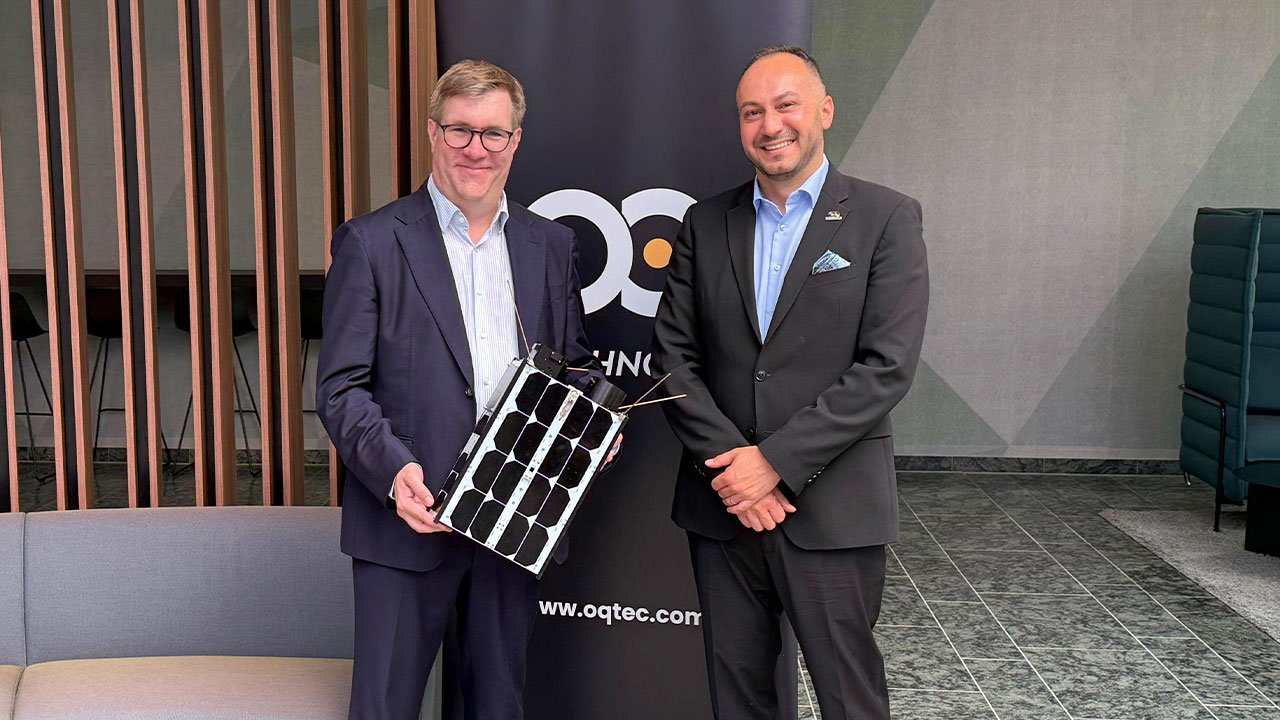
(Photo by Telefonica)
See also: Amazon Leo’s Globalstar deal changes the satellite race

Want to discover how IoT is transforming telecoms and connectivity? Join the IoT Tech Expo in Amsterdam, California, and London. Explore how innovations in 5G, edge computing, and IoT are shaping the future of networks and services. The event is part of TechEx and co-located with other leading technology conferences, click here for more information.
Telecoms Tech News is powered by TechForge Media. Explore other upcoming enterprise technology events and webinars here.
👇Follow more 👇
👉 bdphone.com
👉 ultractivation.com
👉 trainingreferral.com
👉 shaplafood.com
👉 bangladeshi.help
👉 www.forexdhaka.com
👉 uncommunication.com
👉 ultra-sim.com
👉 forexdhaka.com
👉 ultrafxfund.com
👉 bdphoneonline.com
👉 dailyadvice.us