
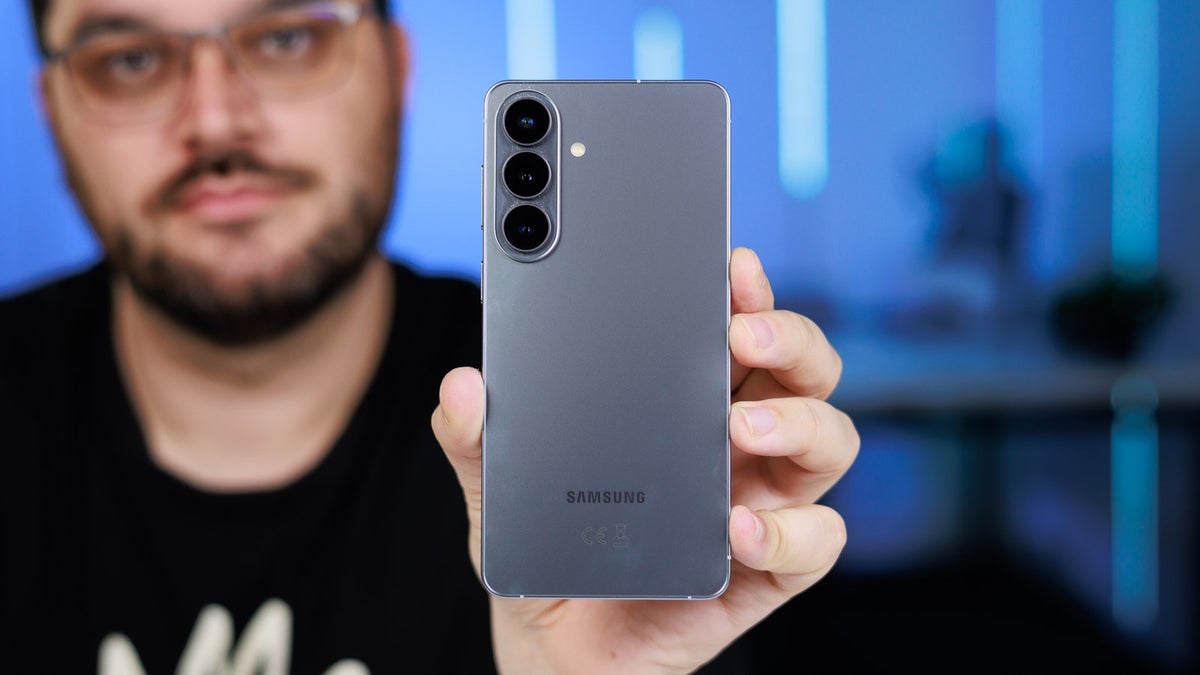
Every year, Samsung releases three standard flagships, but for all intents and purposes, only one of these actually matters––the annual Galaxy S Ultra flavor. While it will be awfully comfortable to pretend that Samsung only launches a Galaxy S Ultra, we shouldn’t forget that a regular Galaxy and a Plus model are also part of the roster, but these are largely irrelevant.
In stark contrast, the new Galaxy S26 Plus has little to no redeeming qualities, which is sadly very similar to its predecessors. That’s because the main goal of the Galaxy S26 Plus is to upsell you on the Galaxy S26 Ultra, and it does that marvelously.
See the pattern?
Widely available in the US
The Galaxy S26 Plus is widely available in the US, where it’s powered by the Qualcomm Snapdragon 8 Elite Gen 5 chipset. The phone starts at $1,100 for the 256 GB starting version, while the 512 GB one costs $1,300. That’s pricier than last year, but we had a 128 GB version then.
Table of Contents:
Galaxy S26 Plus Specs
Blink and you will miss the improvements
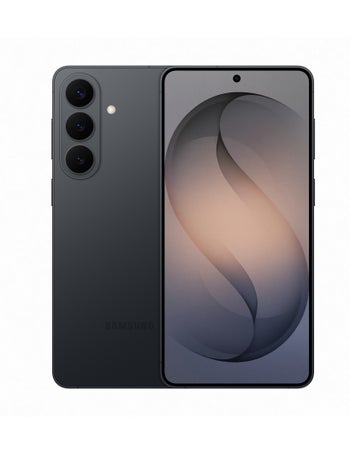
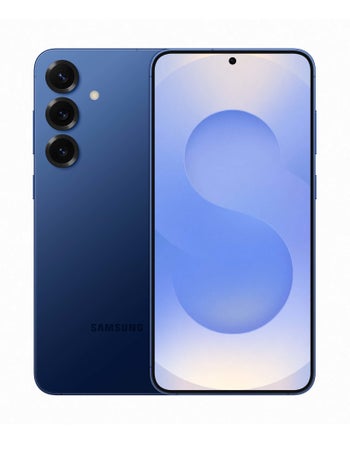
Here’s how the Galaxy S26 Plus compares to its predecessor:
|
|
| Samsung Galaxy S26+ | Samsung Galaxy S25+ |
| Dimensions | |
|---|---|
| 158.4 x 75.8 x 7.3 mm (~10 mm with camera bump) | 158.4 x 75.7 x 7.3 mm (~8.55 mm with camera bump) |
| Weight | |
| 190.0 g | 190.0 g |
| Size | |
|---|---|
| 6.7-inch | 6.7-inch |
| Type | |
| Dynamic AMOLED, 120Hz | Dynamic AMOLED, 120Hz |
| System chip | |
|---|---|
| Snapdragon 8 Elite Gen 5 SM8850-AC (3 nm) International version – Exynos 2600 |
Snapdragon 8 Elite SM8750-AB (3 nm) |
| Memory | |
| 12GB (LPDDR5X)/256GB (UFS 4.0) 12GB/512GB |
12GB (LPDDR5X)/256GB (UFS 4.0) 12GB/512GB |
| Type | |
|---|---|
| 4900 mAh | 4900 mAh |
| Charge speed | |
| Wired: 45.0W Wireless: 15.0W |
Wired: 45.0W Wireless: 15.0W |
| Main camera | |
|---|---|
| 50 MP (OIS, PDAF) Sensor name: Samsung GN3 Aperture size: F1.8 Focal length: 24 mm Sensor size: 1/1.56″ Pixel size: 1.0 μm |
50 MP (OIS, PDAF) Sensor name: Samsung GN3 Aperture size: F1.8 Focal length: 24 mm Sensor size: 1/1.56″ Pixel size: 1.0 μm |
| Second camera | |
| 12 MP (Ultra-wide) Sensor name: Sony IMX564 Aperture size: F2.2 Focal Length: 13 mm Sensor size: 1/2.55″ Pixel size: 1.4 μm |
12 MP (Ultra-wide) Sensor name: Sony IMX564 Aperture size: F2.2 Focal Length: 13 mm Sensor size: 1/2.55″ Pixel size: 1.4 μm |
| Third camera | |
| 10 MP (Telephoto, OIS, PDAF) Sensor name: Samsung S5K3K1 Optical zoom: 3.0x Aperture size: F2.4 Focal Length: 67 mm Sensor size: 1/3.94″ Pixel size: 1 μm |
10 MP (Telephoto) Sensor name: Samsung S5K3K1 Optical zoom: 3.0x Aperture size: F2.4 Focal Length: 67 mm Sensor size: 1/3.94″ Pixel size: 1.0 μm |
| Front | |
| 12 MP | 12 MP |
Samsung Galaxy S26+ vs Samsung Galaxy S25+ specs comparison
or compare them to other phones using our
Phone Comparison tool
Galaxy S26 Plus Design and Display
Consistently decent, but slightly boring
With the Galaxy S26 Plus, Samsung isn’t changing the design language at all and is fully relying on the formulaic and well-established design language. It features a fully flat frame made of aluminum, which is back at the helm since the Galaxy S26 Ultra ditched titanium. The front and back glass panels are made of Gorilla Glass Victus 2 and are both completely flat.
The only small design change this year is the slightly raised camera assembly in the rear. The camera no longer features oversized rings, so it wouldn’t gather dust and lint around the camera lenses. The corner radius has also been updated a bit to match the Galaxy S26 Ultra, but you wouldn’t notice that unless you hold a Galaxy S25 Plus in your other hand, and it’s still a super-small change.
From a size perspective, the Galaxy S26 Plus sits well in the hand. Actually, I have never had a problem with Galaxy S Plus phones and the way they feel in the hand, but I do have slightly larger hands, so I might not be the most representative benchmark out there.
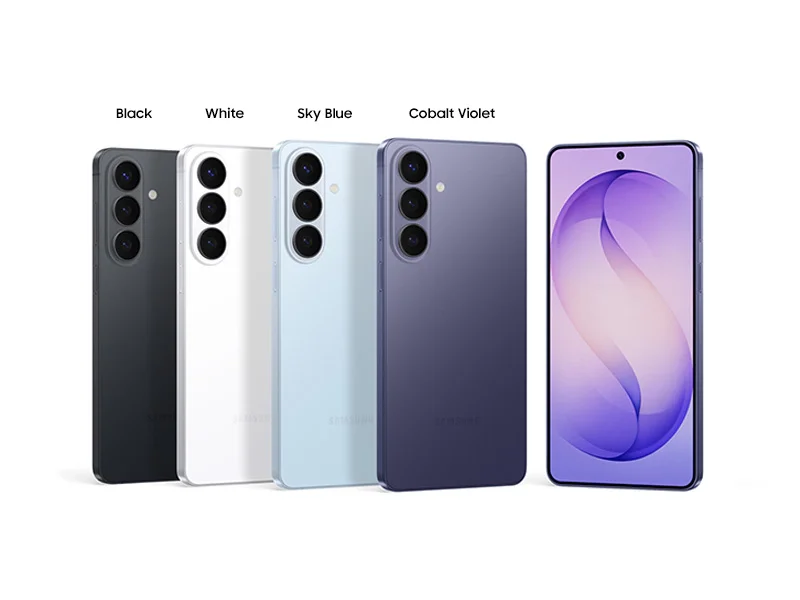
Samsung Galaxy S26 Plus color options. | Image by Samsung
You can get the Galaxy S26 Plus in Cobalt Violet, Sky Blue, White, and Black colors. If you purchase it from Samsung.com, you can also get it in Silver Shadow or Pink Gold colors.
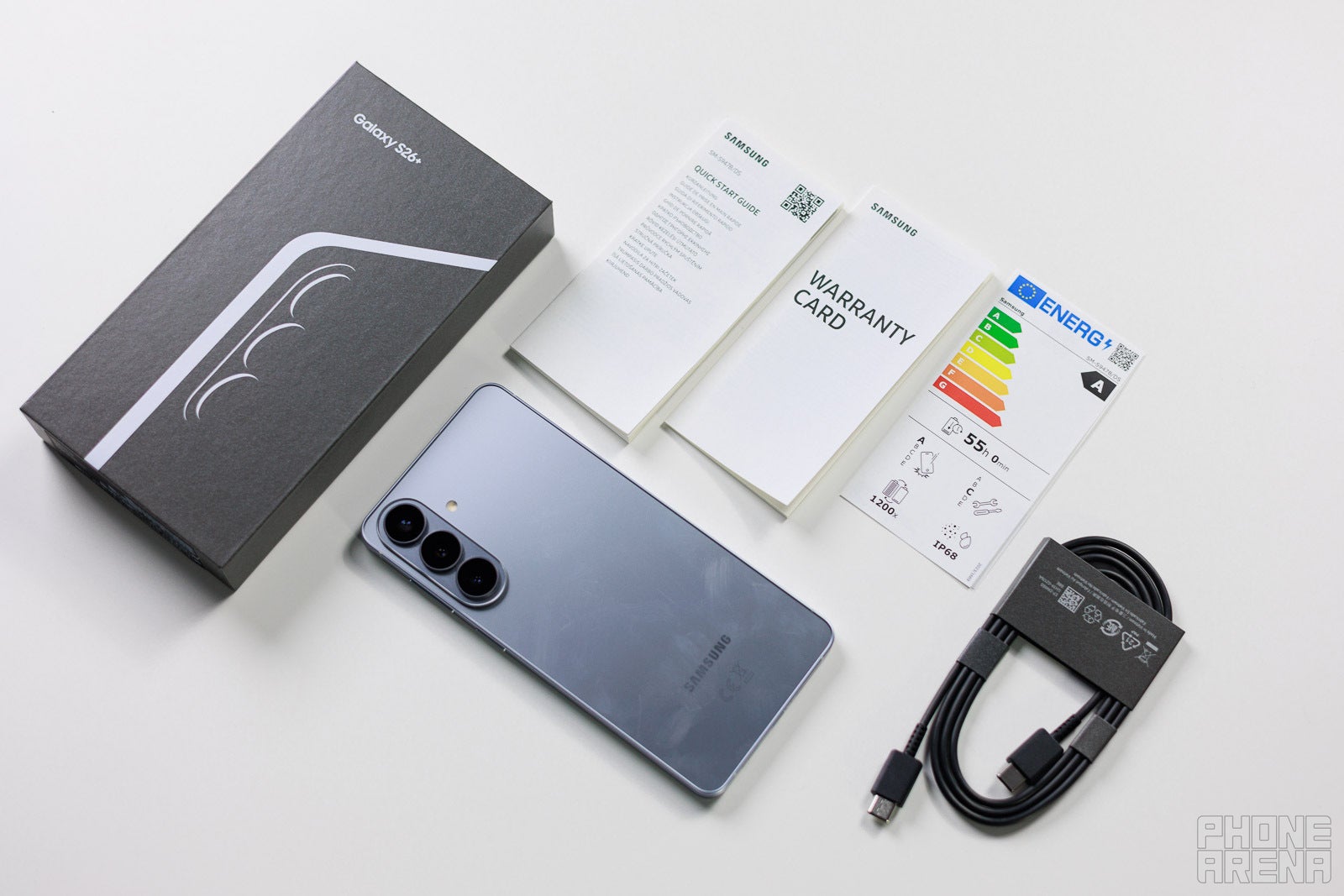
A pretty lackluster unboxing. | Image by PhoneArena
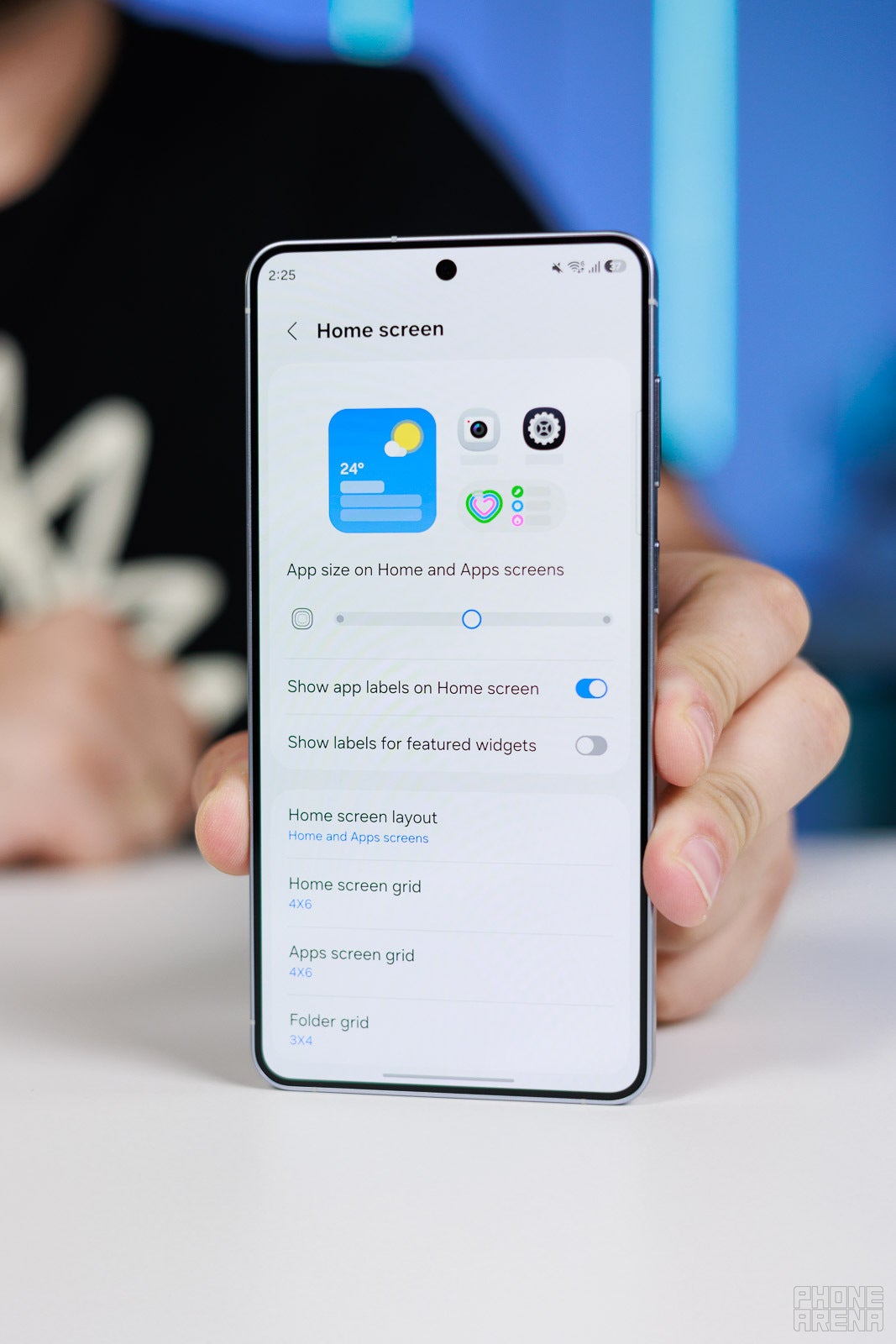
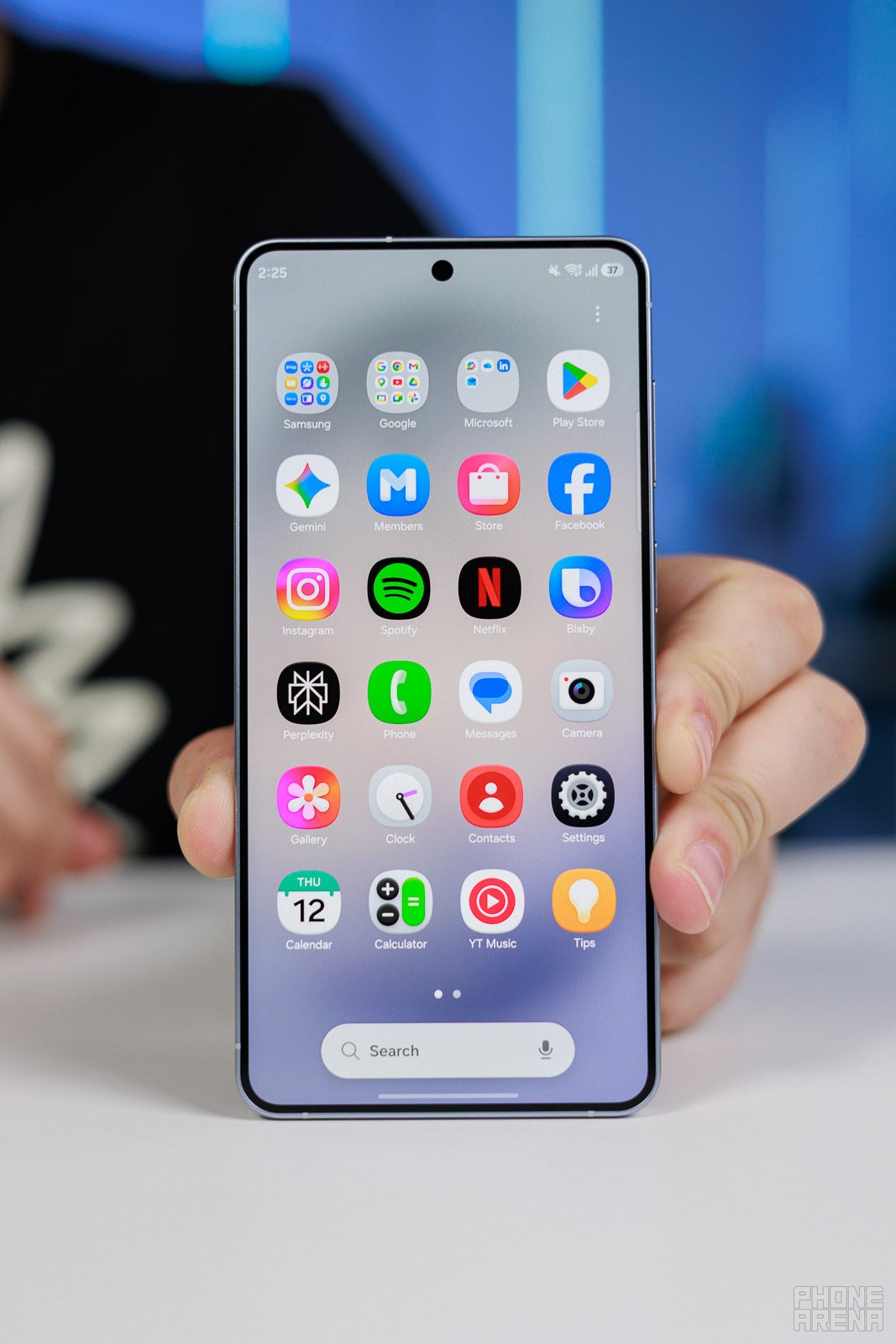
The Galaxy S26 Plus comes with a 6.7-inch Dynamic AMOLED screen, one that has a smooth 120 Hz refresh rate, HDR, and a QHD+ resolution with excellent sharpness. The peak brightness is similar to the one on the Galaxy S25 Plus, so no updates here.
The Galaxy S26 Plus lacks some of the nicer features that the Ultra models have had for a while, like an anti-reflective coating that passively boosts the legibility under extreme lighting conditions. More importantly, it lacks the new Privacy Display feature that is the highlight feature of the Galaxy S26 Ultra. So, to sum it up, no fun features and similar specs to both the older Galaxy S25 Plus and the Galaxy S24 Plus.
However, I have to admit that I like the screen of the Galaxy S26 Plus more than the one on the Galaxy S26 Ultra due to the ironic reason that it has slightly better viewing angles. Even if you turn off the Privacy Display feature on the Ultra, its screen tends to get darker than the S26 Plus when you’re viewing it from a more obtuse angle.
Other than that, the peak brightness, the colors, and the minimum brightness are all great on the Galaxy S26 Plus, largely similar to the Galaxy S25 Plus.
The biometrics are handled by the now standard for Samsung’s flagships ultrasonic fingerprint reader, which is traditionally fast and accurate. There’s also picture-based face unlock on board, but it is there just for convenience. It can’t be used to authenticate banking apps the way Apple’s Face ID or the newer Pixels’ face unlock can.
Galaxy S26 Plus Camera
Does the job, but fails to excite
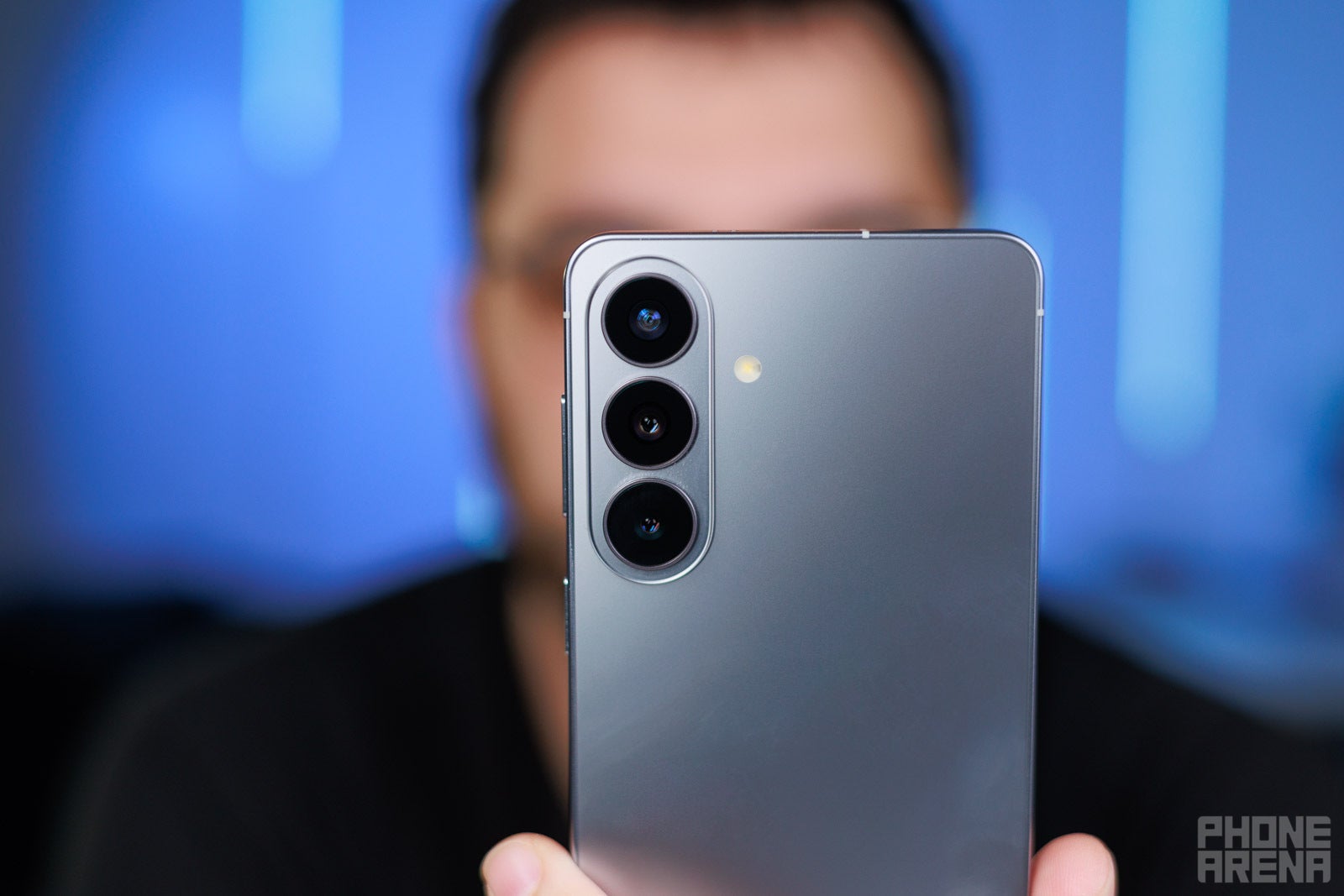
A camera system that has remained mostly unchanged for five years now. | Image by PhoneArena
The Galaxy S26 Plus has the same triple camera that has been largely reused since the Galaxy S22 Plus. All Galaxy S26 Plus since then have featured 50 MP main cameras with F1.8 aperture, a 1/1.56″ size, and 1.0 µm pixels. The 12 MP ultrawide F2.2 cameras have relied on the Sony IMX564 sensor, and the 10 MP telephoto cameras with 3X optical zoom have all relied on the Samsung S5K3K1 sensor.
So, any and all inter-generational improvements have largely stepped on the shoulders of massive image-processing and algorithm upgrades. Well, apparently, this seems to work for Samsung so far, as all Galaxies since the Galaxy S22 Plus have consistently scored small but notable gains in our custom camera test. The Galaxy S26 Plus earns a combined score of 149 points, which ranks it above the Galaxy S25 Plus.
Looking at the camera samples taken from the Galaxy S26 Plus, one term that comes to mind is “consistency”. Notice how that term is not “excitement”, though.
Galaxy S26 Plus camera samples
Galaxy S26 Plus camera samples
All the pictures are fairly detailed and well-exposed, with colors that definitely lean towards realism rather than vividness, which is commendable. The skies are fortunately not painted in that artificial, gaudy blue that some older Galaxies did, and even grass looks exceptionally realistic. Low-light performance leaves a lot to be desired, though, as there’s a noticeable amount of color noise in most of the low-light photo samples. Zoom quality is acceptable but far behind the Galaxy S26 Ultra or even similarly priced flagship devices hailing from China that completely dominate zoom in that price niche.
Video Quality

The Galaxy S26 Plus takes very decent 4K30fps videos with great colors, decent stabilization, excellent dynamics, and excellent sharpness. It’s not at the level of iPhone in terms of video quality, but it’s slowly crawling towards it.
Galaxy S26 Plus Performance & Benchmarks
Welcome back, chipset separation
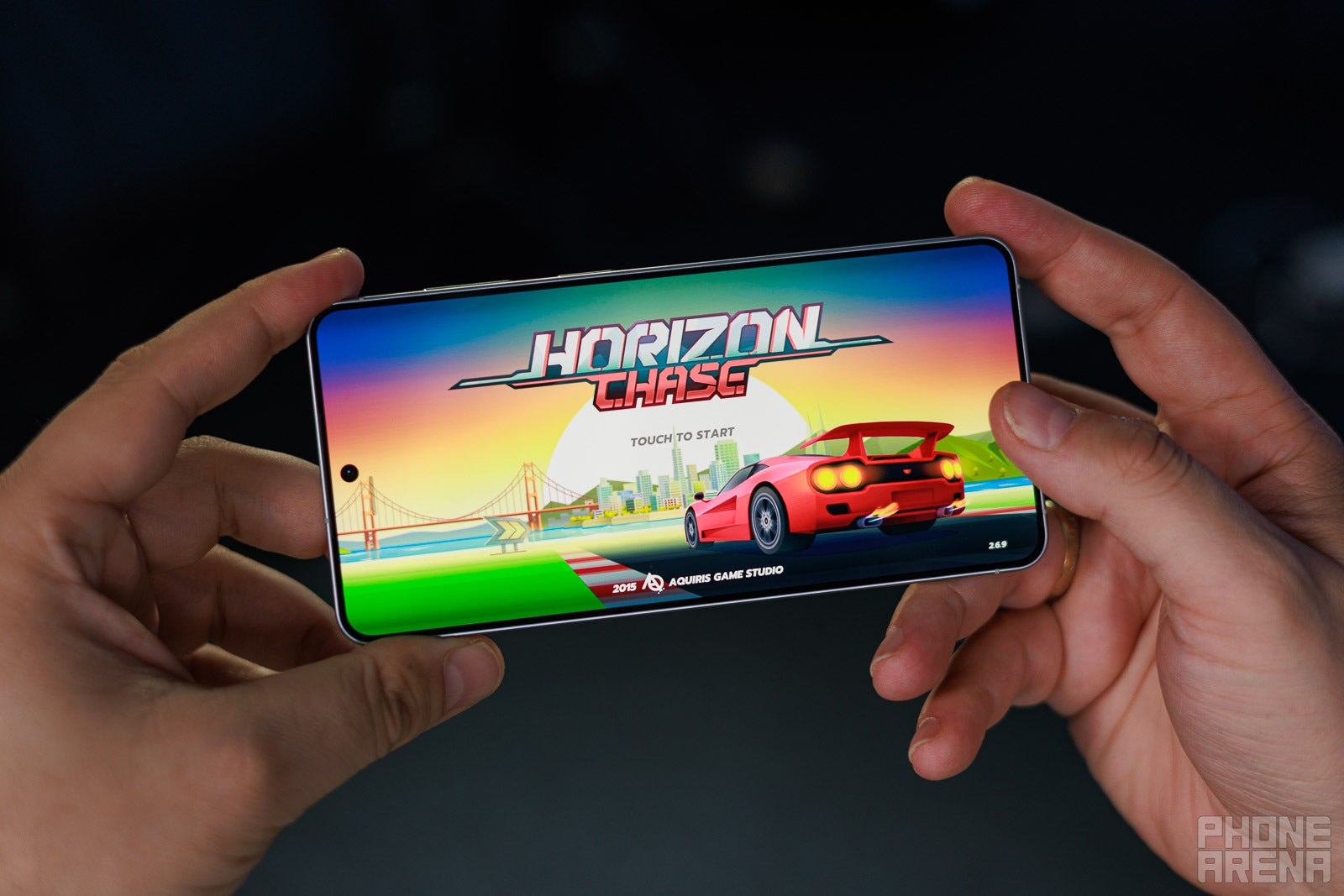
Gaming is pretty decent on the Galaxy S26 Plus. | Image by PhoneArena
Samsung is back with its regional chip separation with the Galaxy S26 family. In the US and select other markets, the Galaxy S26 and Galaxy S26 Plus come with the 3nm Snapdragon 8 Elite Gen 5 chip, but in all other regions across the globe, we get the 2nm Exynos 2600 chip. This review is based on the Exynos-powered model.
And I have to admit that the real-life performance of the Galaxy S26 Plus, as it happily chews through any task or game. The performance is unquantifiable in standard everyday usage. Of course, I bet there would be a difference between the Exynos and Snapdragon versions of the Galaxy S26 or Galaxy S26 Plus.
CPU Performance Benchmarks:
GPU Performance
When it comes to gaming, the Galaxy S26 Plus is a superb performer. It achieves a pretty high result in the 3DMark Wild Life Extreme test, where it clocks in a respectable 6,958 points of peak performance. That, for example, is enough to beat the iPhone and leave the Pixel in the dust, but the Galaxy S26 Ultra still has the edge with nearly 8,000 points.
In the sustained performance result, the Galaxy S26 Plus throttles more than either the iPhone or the Ultra models, but still performs fairly decently. The Pixel is embarrassingly left behind here as well.
The phone comes with 12 GB of RAM, and there’s also a RAM Plus feature that allocates a portion of your storage as memory (up to 12 GB). You can get the Galaxy S26 Plus with either 256 or 512 GB of storage, and I’d recommend getting the higher one, especially if you intend to keep this phone until its wheels fall off, as the saying goes.
Galaxy S26 Plus Software
The Galaxy S26 Plus comes with One UI 8.5 based on Android 16. It’s the latest version of one of my favorite Android interfaces around, combining useful features with unmatched personalization. With the help of the Good Lock module suite, you can customize pretty much any aspect of your interface, and no other phone can offer the same levels of customization.
The most intriguing ones to me here are Photo Assist, which lets you reimagine your photos with the help of AI and apply cool filters to them. Moreover, Audio Eraser does a good job of eliminating unwanted noises from the videos you record. Photo Assist is solid fun when it goes through and generates exactly what you’ve prompted it to, but occasionally a successful result requires too many consecutive prompts to fine-tune.
Of these, however, I mostly use Google’s Gemini and Circle to Search. I’m just not that into AI features and don’t really find them beneficial to my personal use case. More power to you if you love AI, though.
The Galaxy S26 Plus will enjoy seven years of major Android updates and monthly security patches, which is as good as it gets.
Galaxy S26 Plus Battery
Decent battery life but nothing outstanding
Equipped with a 4,900 mAh battery, the Galaxy S26 Plus delivers battery life that’s fairly average. Don’t get me wrong, it will get you through a day of heavy usage, but you will be looking for a charger in the early evening.
In the custom PhoneArena battery tests that I ran, the phone achieved 18 hours and 23 minutes in our web browsing test, which emulates a standard browsing workflow. This result is a bit higher than the average result. The Galaxy S26 Plus scores nearly ten hours in the video-streaming test, which is a bit lower than the average. Finally, the phone clocks in at ten hours and 18 minutes in our 3D gaming test, which is fairly decent. All tests were conducted at 200 nits of brightness.
PhoneArena Battery Test Results:
Charging hasn’t scored an upgrade, so the Galaxy S26 Plus arrives with 45 W wired charging. It takes exactly 63 minutes to charge it fully, which is fairly speedy. Even a brisk 30-minute charge would get you 67% of battery charge.
Galaxy S26 Plus Audio Quality and Haptics
Typically for a Samsung flagship, the Galaxy S26 Plus’ dual speakers sound wonderful. They are very loud without distorting too much at higher volume levels, and the soundstage is fairly wide for a phone. You will definitely enjoy listening to music from the speakers of this device. The Ultra sounds a bit better, but the Plus impresses as well.
The haptics are also very decent, providing strong and precise vibrations when you interact with the interface or receive notifications and calls. Certainly a flagship experience in this aspect.
Should you buy it?
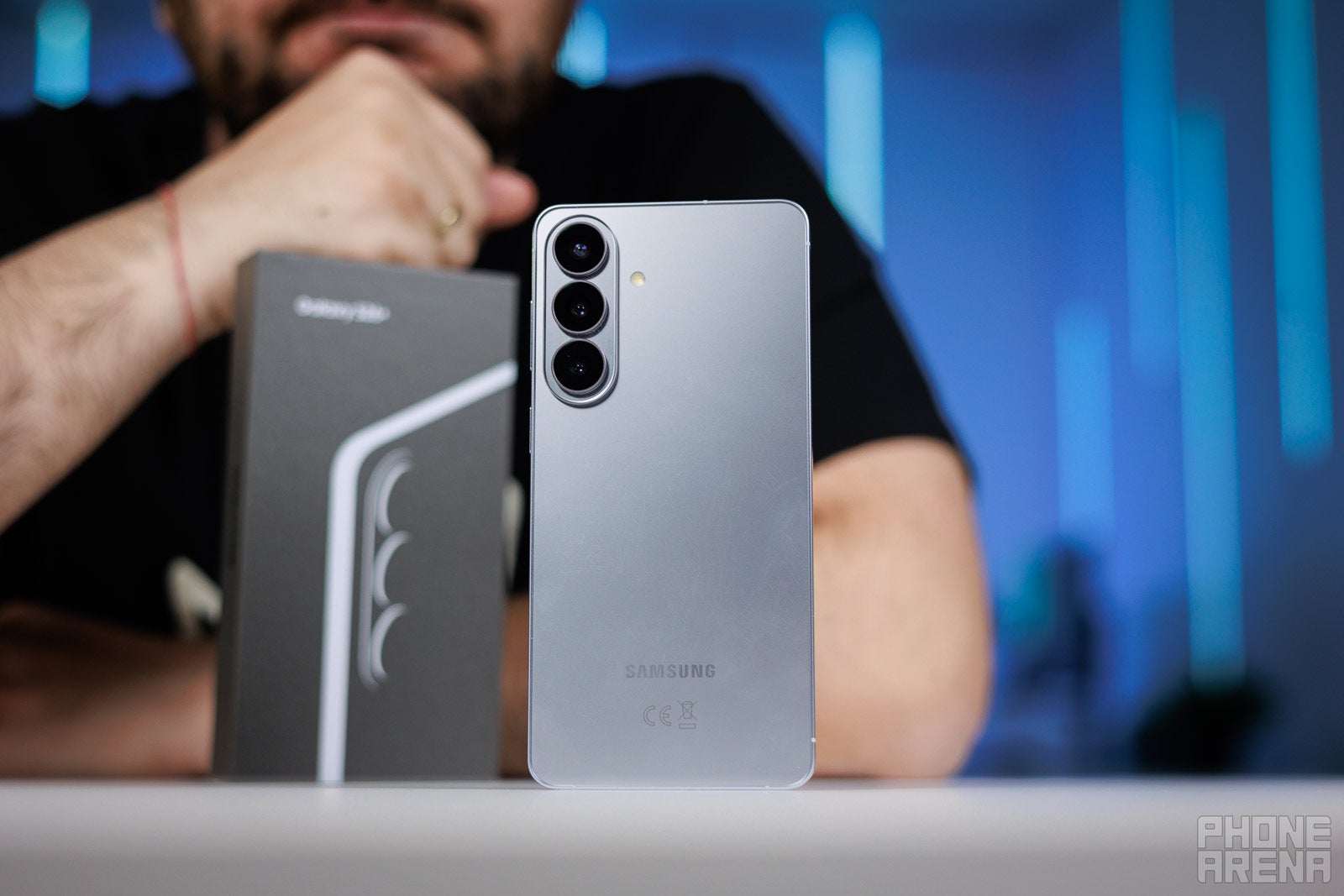
Just get the Galaxy S26 Ultra and be done with it. | Image by PhoneArena
Another year, another Galaxy S Plus model that tastes like reheated leftovers.
Don’t get me wrong, there’s nothing inherently wrong with the Galaxy S26 Plus—it’s a boringly decent phone that’s sadly outshined by its slightly pricier, better-camera-wielding, and S Pen-featuring Galaxy S26 Ultra cousin.
The whole existence of the Galaxy S26 Plus is questionable to me, as the economic side of owning one doesn’t really make sense. If you’re already spending $1,100 on a Galaxy S26 Plus, it certainly makes sense to splurge on the Galaxy S26 Ultra, where you get a better camera, a display with better features, significantly better performance, and an S Pen stylus.
However, if you’re set on buying a Galaxy S26 Plus and nothing else, I doubt you’d be disappointed. The camera is very decent this year, with Samsung tuning the image-processing towards a more realistic picture. The performance of the Exynos model, while less impressive than the Snapdragon flavors, is perfectly enough.
Yet, the design is a bit too safe for another year in a row, and the lack of cool features trickling down from the Ultra is becoming a saddening pattern. This kind of seals the fate of the Galaxy S Plus for me. The Galaxy S26 Plus lacks any unique features that would beckon you to buy it.
I struggle to see who would get this phone instead of the Ultra. I certainly wouldn’t.
👇Follow more 👇
👉 bdphone.com
👉 ultractivation.com
👉 trainingreferral.com
👉 shaplafood.com
👉 bangladeshi.help
👉 www.forexdhaka.com
👉 uncommunication.com
👉 ultra-sim.com
👉 forexdhaka.com
👉 ultrafxfund.com
👉 bdphoneonline.com
👉 dailyadvice.us