
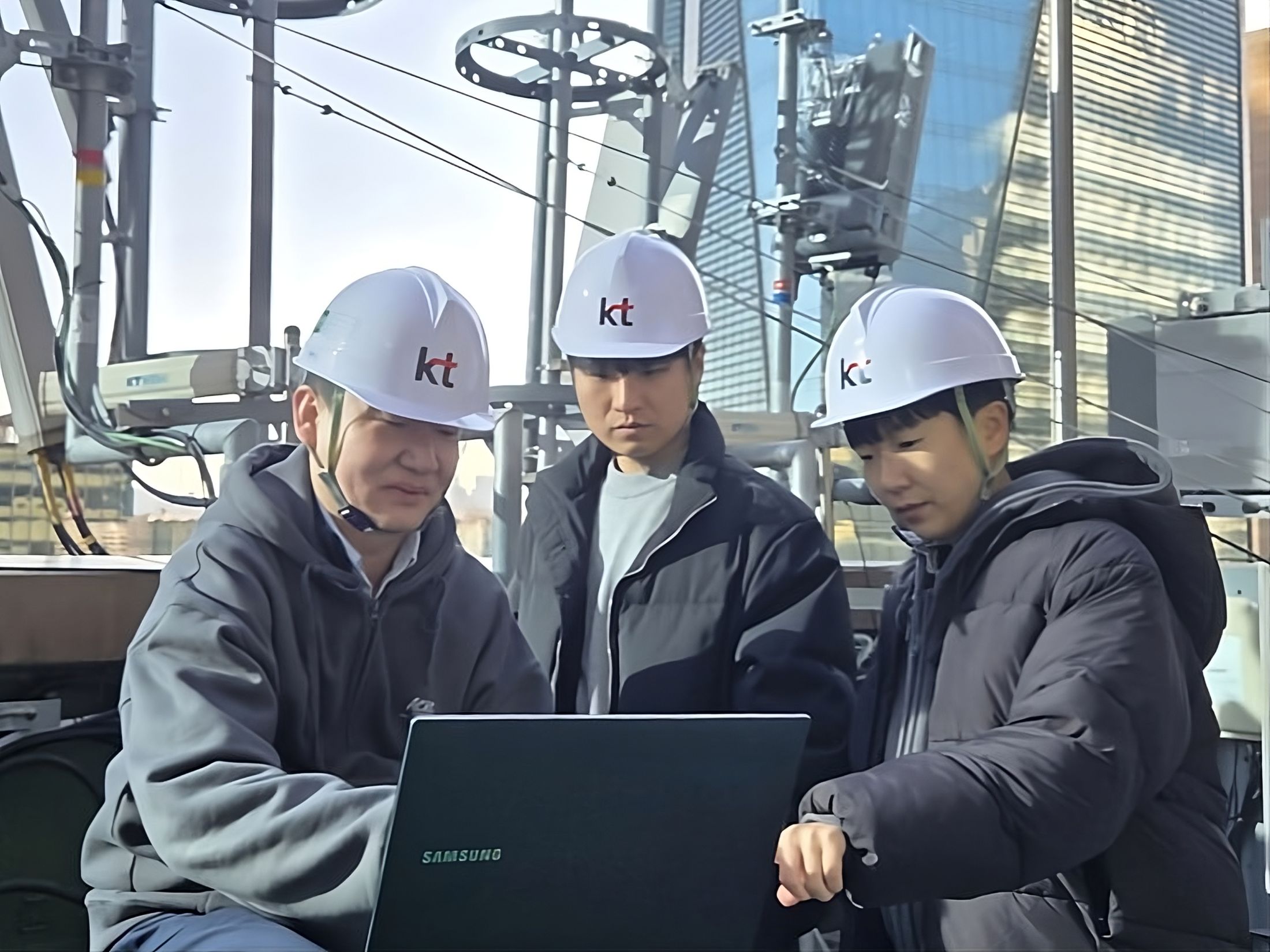
Samsung and telecoms operator KT have demonstrated the benefits of AI-RAN optimisation on live commercial networks.
The partners confirmed that AI can maintain stable service quality on a live network, even as users move through challenging environments. This validation follows a simulation phase completed in June and represents the first time this specific architecture has been proven outside of a test lab.
As data demands grow, the traditional method of applying a single configuration to an entire cell sector is becoming untenable. This trial suggests that future networks will adapt to the device and its context, rather than forcing the device to adapt to the network.
AI-RAN optimisation: From cell-centric to user-centric networks
Legacy network operations rely on broad parameters. A base station typically applies the same settings to every connected device, regardless of whether the user is stationary in a strong signal area or moving rapidly through a zone with interference. This rigidity often leads to dropped connections when conditions fluctuate.
The AI-RAN optimisation tested by Samsung and KT inverts this model. Instead of optimising for the average user, the system applies specific configurations for each device based on real-time wireless conditions.
This approach relies on predictive analysis. The system uses AI to learn from a user’s movement paths and usage history, identifying recurring patterns to anticipate connectivity drops. By forecasting these issues, the network can adjust parameters proactively to prevent a disruption before it occurs.

Field validation results
To stress-test this AI-RAN architecture, Samsung Research and KT’s Future Network Laboratory deployed the technology in Seongnam, Gyeonggi Province. The trial involved approximately 18,000 users and focused on areas with varying environmental conditions.
The teams targeted users who had historically experienced frequent service interruptions. By applying the AI-RAN optimisation to these devices, the system could identify the specific patterns causing failure and deploy customised configurations.
Comparison of performance data before and after the implementation showed a decrease in connection failures for the targeted users. The data also indicated a reduction in issues for other users in the same region, suggesting that optimising for the “edge cases” improves overall cell performance.
Samsung and KT lay the groundwork for 6G
While 5G deployment is still maturing, this AI-RAN optimisation validation by Samsung and KT serves as groundwork for 6G networks. The next generation of connectivity will require networks to handle higher data loads and more complex mobility scenarios without increasing failure rates.
“This is a major milestone that shows how AI can improve user experience on real-world commercial networks,” said JinGuk Jeong, Executive VP and Head of the Advanced Communications Research Center at Samsung Research. “Through close collaboration with KT, we will continue shaping and validating the next generation of AI-driven communication technologies.”
For KT, the trial offers proof that network operations can become more adaptive.
“This achievement demonstrates that AI can transform network operations around users,” said Jong-Sik Lee, Executive VP and Head of the Future Network Laboratory at KT. “Together with Samsung, we will continue developing customised optimisation technologies to deliver stable, uninterrupted service and drive core 6G capabilities that create new value for customers.”
The successful validation of AI-RAN technology by Samsung and KT on a commercial network indicates that wireless infrastructure is becoming increasingly software-defined and predictive.
Enterprise leaders responsible for mobile workforce connectivity or distributed IoT assets should expect improved SLAs as operators adopt dynamic optimisation like AI-RAN enables. When evaluating future connectivity partners, assess their roadmap for AI-integrated radio access networks, as this capability will determine reliability in high-mobility and weak-signal areas.
See also: Global connectivity slows as enterprise infrastructure gaps widen

Want to learn about the IoT from industry leaders? Check out IoT Tech Expo taking place in Amsterdam, California, and London. The comprehensive event is part of TechEx and is co-located with other leading technology events. Click here for more information.
Telecoms is powered by TechForge Media. Explore other upcoming enterprise technology events and webinars here.
👇Follow more 👇
👉 bdphone.com
👉 ultractivation.com
👉 trainingreferral.com
👉 shaplafood.com
👉 bangladeshi.help
👉 www.forexdhaka.com
👉 uncommunication.com
👉 ultra-sim.com
👉 forexdhaka.com
👉 ultrafxfund.com
👉 bdphoneonline.com
👉 dailyadvice.us