
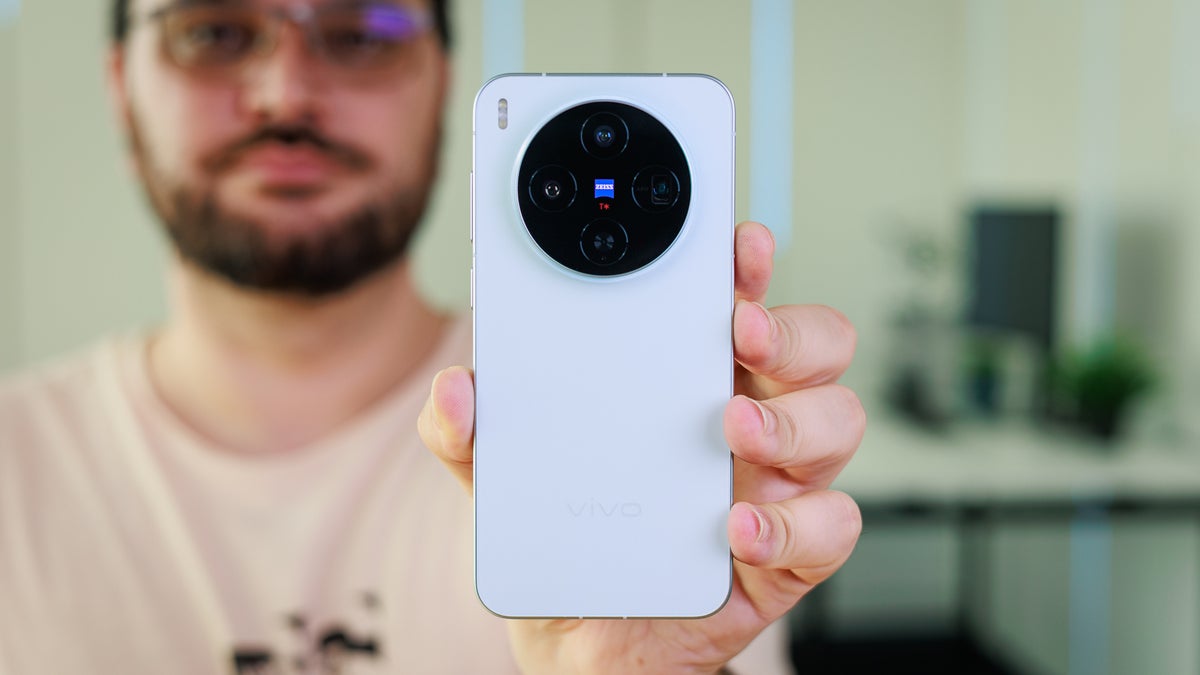
Now that these are being sold internationally (not in the US, though), we know that the Vivo X300 is €350 cheaper than the Pro in Europe. The question is — what’s the tradeoff, what’s the catch, and is it still a smartphone that warrants a €1,049 price-tag?
The good news is that it rocks the same MediaTek Dimensity 9500 chip, the display — while smaller — still rocks the same great tech behind it, and the camera — while downgraded — still hits hard. Let’s get into the full Vivo X300 review!
Vivo X300 Specs
6.3″ is the new compact
| Vivo X300 | Vivo X300 Pro |
|---|---|
| Size and Weight 150.57 x 71.92 x 7.95 mm 190 g |
Size and Weight 161.98 x 75.48 x 7.99 mm 226 g |
| Display 6.3″, AMOLED 120 Hz, 4,500 nits peak 2640x1216px, 20:9 ratio, 460 PPI |
Display 6.8″, AMOLED 120 Hz, 4,500 nits peak 2800x1260px, 20:9 ratio, 453 PPI |
| Processor MediaTek Dimensity 9500 3 nm, 4.21 GHz |
Processor MediaTek Dimensity 9500 3 nm, 4.21 GHz |
| Software OriginOS 6 / Android 16 |
Software OriginOS 6 / Android 16 |
| Cameras Main: 200 MP, f/1.7 Ultra-wide: 50 MP, f/2.0 Zoom: 50 MP, 3x, f/2.6 Front: 50 MP, f/2.0 |
Cameras Main: 50 MP, f/1.6 Ultra-wide: 50 MP, f/2.0 Zoom: 200 MP, 3.5x, f/2.7 Front: 50 MP, f/2.0 |
| Battery Size [international model] 5,360mAh Silicon-carbon |
Battery Size [international model] 5,440 mAh Silicon-carbon |
| Charging Speeds 90 W wired 40 W wireless |
Charging Speeds 90 W wired 40 W wireless |
| Prices €1,049 for 16GB+512GB |
Prices €1,399 for 16GB+512GB |
Vivo X300 Design and Display
Flat look, fun colors

The Vivo X300 feels pleasantly light and balanced in the hand. The huge round camera module on the back can poke at your index finger and get you to change your grip. But at least it’s easy to adjust since the phone is well balanced. The matte glass back is a fine grain that does feel a little slippery with dry hands. But the frame is easy to hold on to.
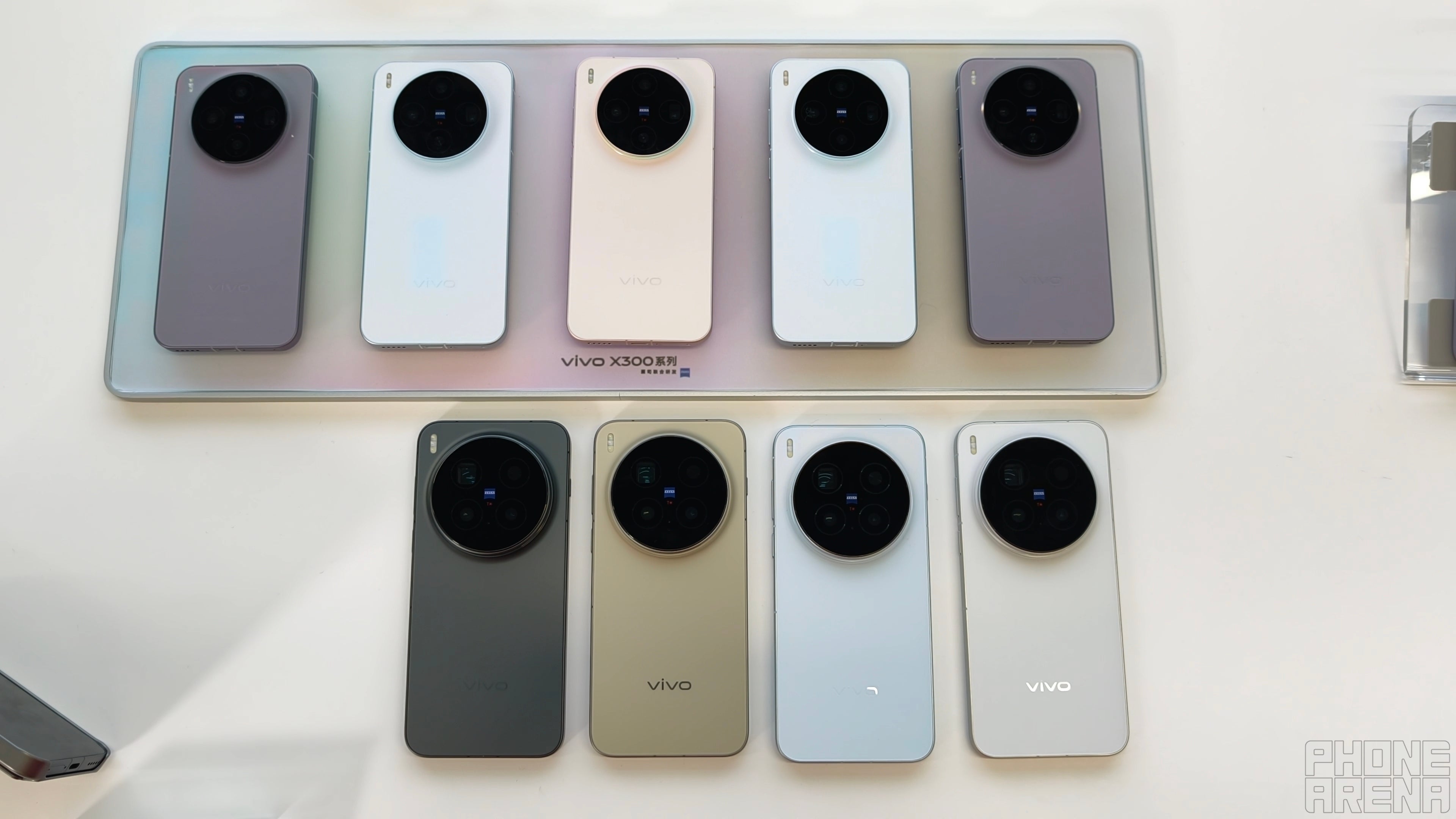
Vivo X300 colors on top, X300 Pro on bottom
The Vivo X300 had a lot of colors available at the launch event but Europe currently seems to be getting only two — black and pink. Not even the dreamy light blue color that we have as a review unit.
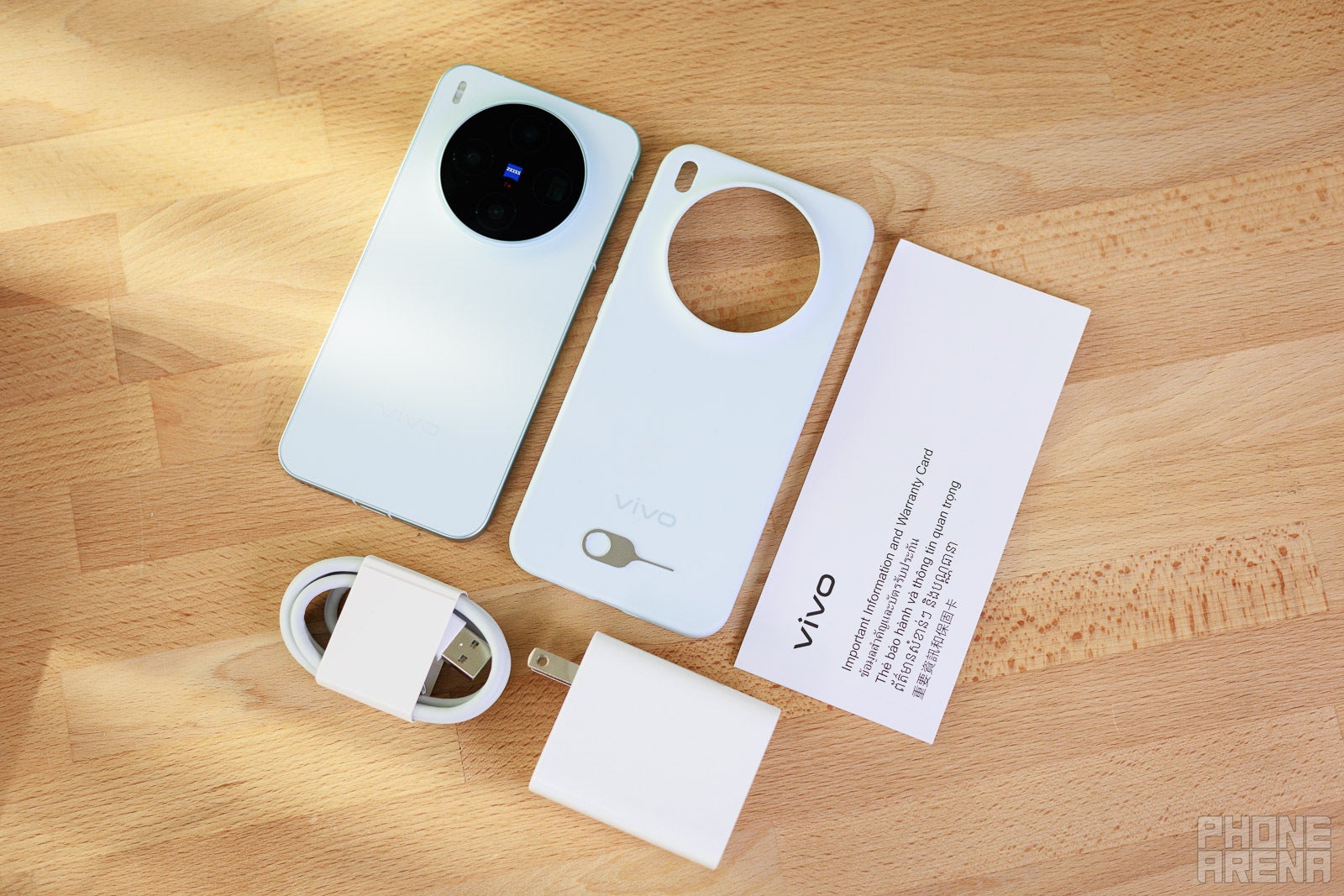
Our unit of Vivo X300 had a charger inside the box, while the Vivo X300 Pro did not — so, that may vary by market. Otherwise, we also got a USB C cable and a color-matched case to boot.
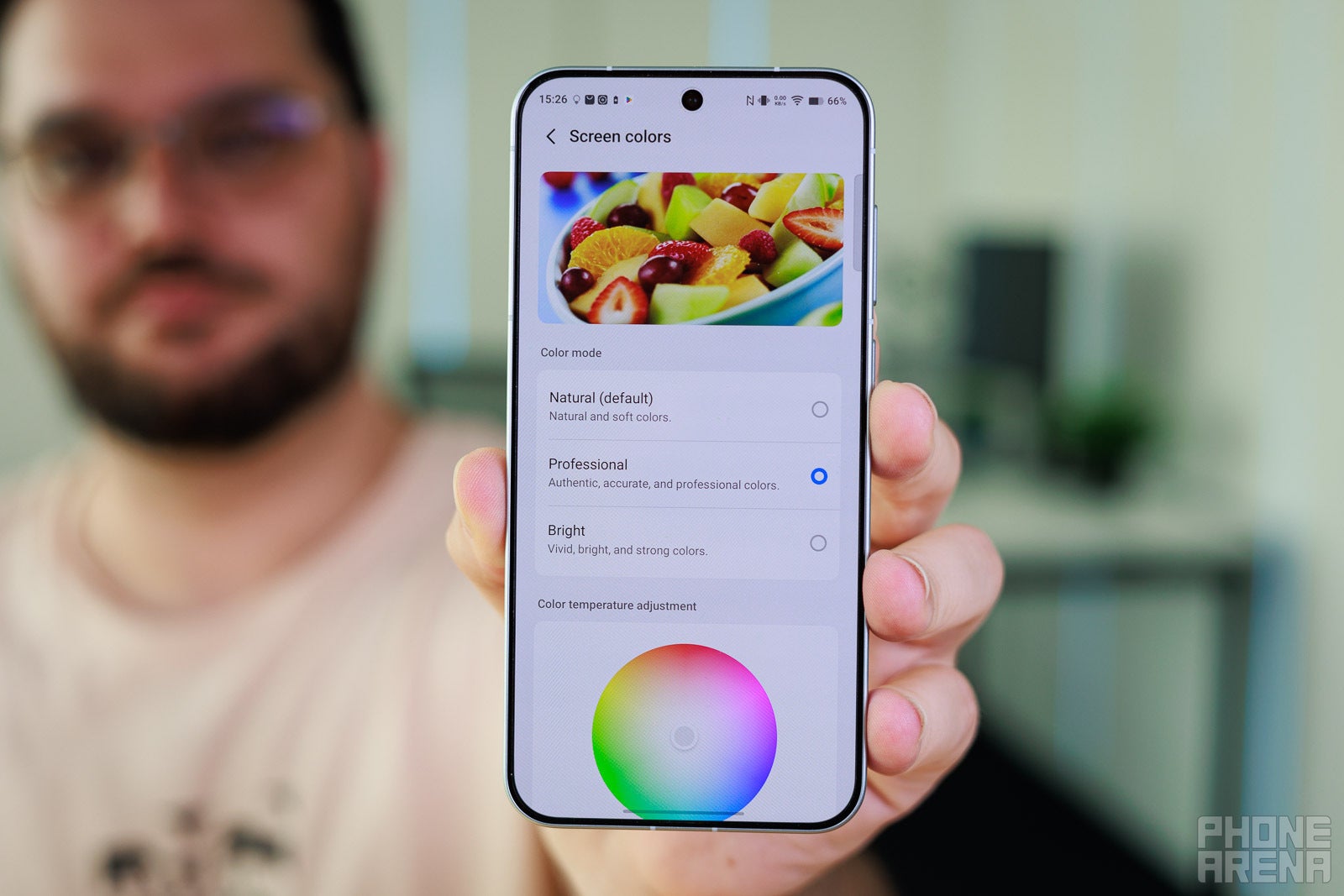
The display here is a 6.3″ AMOLED panel with a smooth 120 Hz refresh rate. The odd 2640x1216px resolution gives us a sharp 460 pixels per inch. Peak brightness is 2,000 nits — plenty enough, but not like the 4,500 nit peak of the X300 Pro. However, we measure at 20% APL to simulate something closer to real-life use, and both the X300 units perform similar in that scenario:
In terms of color accuracy, it is also excellent — performing just as well as the bigger international sellers, like Samsung and Google. Plus, a few color modes that either take things to vibrant, warm and soft, or pro color calibration.
Vivo X300 Camera
200 MP of goodness
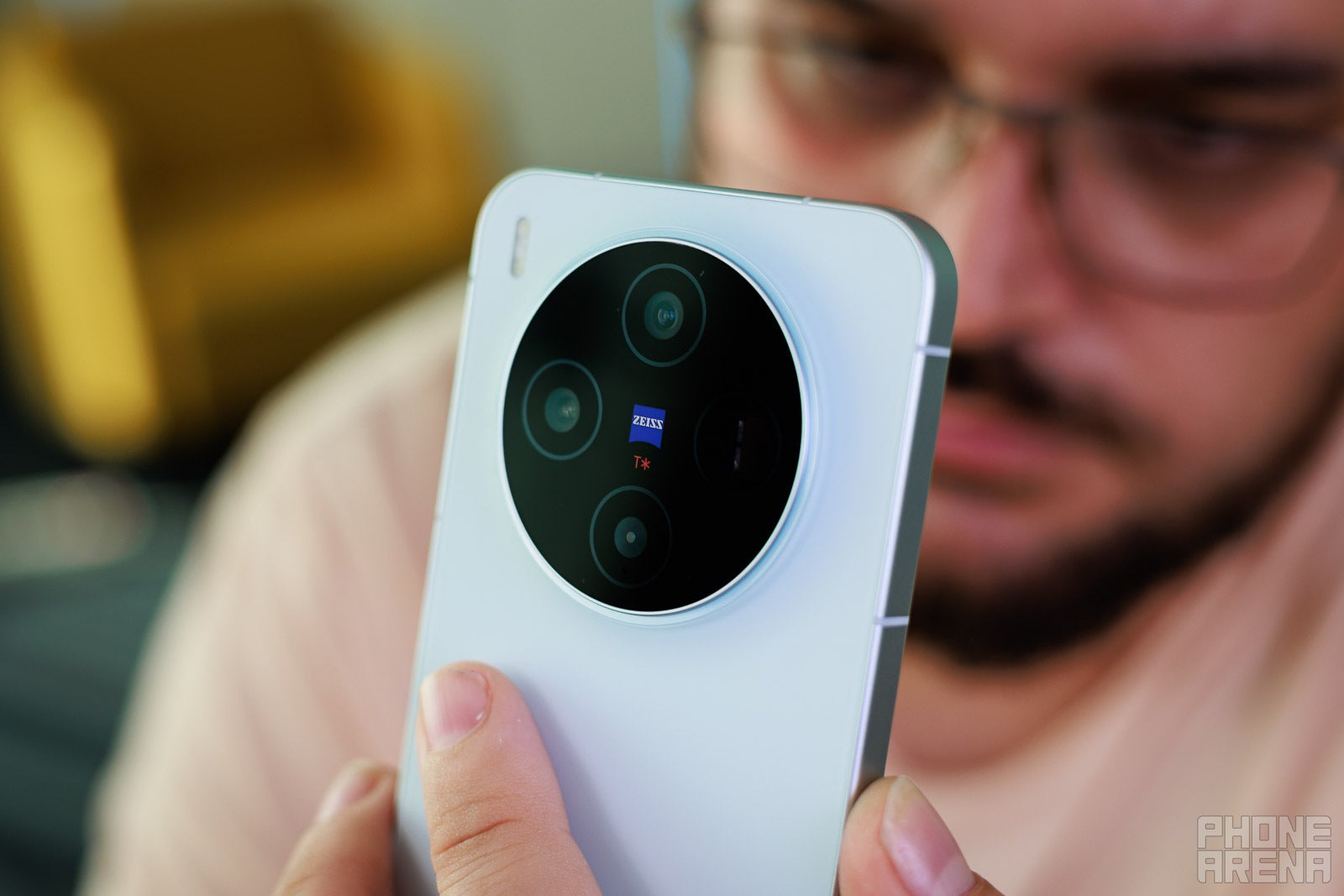
Unlike the Pro model, where the 200 MP sensor was under the zoom camera, the regular Vivo X300 puts the super-high-res camera front and center, underneath the main lens (24 mm wide-angle, to be exact). We’ve got a rich camera app with tons of options — tapping on a single zoom step for example takes you from 24 mm to 36 mm with a slight crop-in, to simulate more traditional point-and-click cameras.
The zoom camera has a 3x lens and a 50 MP sensor underneath, so it’s not like it’s forgotten. Definitely not as good a zoom as on the X300 Pro, of course, but it’s still perfectly usable. In fact, it can also go up to 100x. You can see some AI shenanigans with heavy noise reduction and a lot of sharpening and “imagining” of details, but it does look pretty clean and presentable none the less.
The ultra-wide camera is also 50 MP and produces pretty good epic shots, with a very effective edge-distortion correction.
There are also a lot of pre-set filters that you can use. The camera app opens in Vivid mode by default. There’s the fan-favorite Zeiss Natural and my favorite Textured, which enhances the contrast for more dramatic pictures.
The video score in our test was dragged down by visible oversharpening of fine details and, more importantly, not great performance in lower light. The good news is that in well-lit scenarios, you can take pretty great videos with this phone. I am especially taken by the slow motion imagery from the Vivo phones, the X300 included. Too bad it doesn’t record with sound (in slo-mo), but the visuals can be striking:

Vivo X300 Performance & Benchmarks
MediaTek Dimensity 9500 partnership
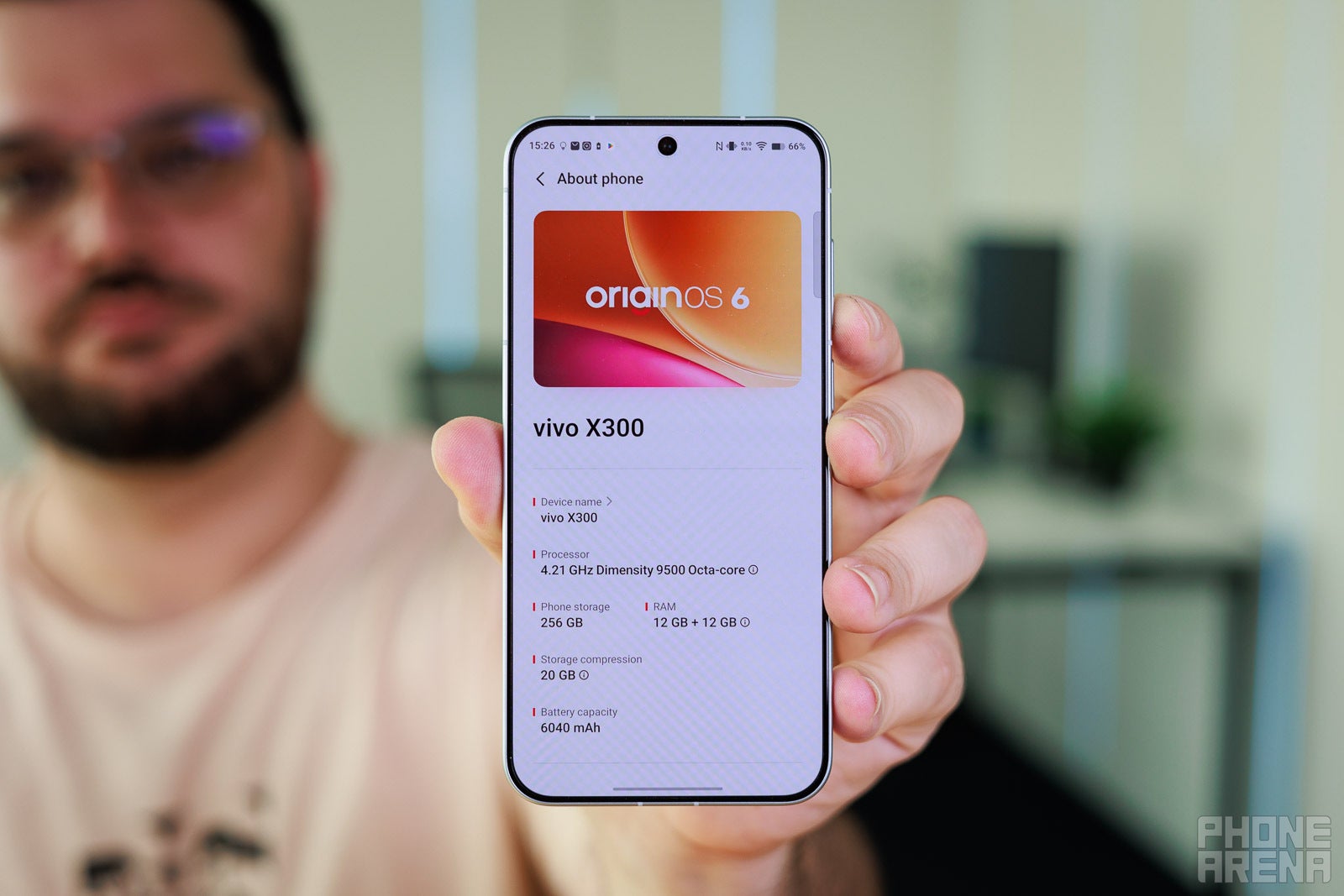
Vivo partnered with MediaTek while the latter was developing its next flagship chip — the 3 nm Dimensity 9500. It goes to reason that the phone’s software will be finely tuned to work with the new hardware — and vice versa. Vivo’s part in that parnership was to lend its V3+ imaging chip to MediaTek. Yep, the Vivo tech is baked into the Dimensity 9500, so any phone that has that processor can benefit from it. To be clear, Vivo has a secondary VS1 chip, which is used for pre-processing the photos before they even hit the Dimensity for post-processing. The VS1 is still exclusive to Vivo phones.
So, MediaTek generally has a rep for making midrange processors. That’s not exactly the case — the Dimensity 9xxx series is pretty powerful. The ROG Phone 6D Ultimate showed me that years ago, when the Dimensity 9000+ scored just as well as the Snapdragon 8 Gen 1. So, I wasn’t surprised to see the Vivo X300 pulling numbers:
CPU Performance Benchmarks:
As expected, the CPU scores don’t disappoint. In real-life use, the phone is super-snappy and responsive — as you’d expect from a modern flagship. I also had trouble getting it to hiccup, stutter, or throttle. Speaking of which, let’s move on to the 3DMark stress test:
GPU Performance
It’s very impressive that, even though it has a smaller body to disperse the heat with, the Vivo X300 still hangs with its bigger sibling. Throttling down to a score that’s still higher than the competition easily. Technically, you can game on this phone worry-free, if you can do it on a 6.3-inch screen that is. Otherwise, this performance should also translate well to video-editing apps, if you want to show the world what you’ve done with the great camera.
Vivo X300 Software
OriginOS 6 is Vivo’s new software, replacing the old Funtouch OS. The latter had a bad name for some reason — personally, I liked it for its many quality-of-life shortcuts and finger gestures. The good news is that OriginOS 6 is sleeker, prettier, more responsive, and still has the positives of Funtouch. Customizable “quick actions”, three-finger screenshotting, quick multi-window by swiping in from the corner. It’s all here.
Vivo made it a point to make app-opening super-fast. It’s so fast, in fact, that you can tap on an icon and then change your mind mid-animation and tap on another one to open that instead. With proper timing and training, you can keep tapping two apps that are on the opposite ends of the homescreen and “juggle” with them. That’s a mini-game in its own right!
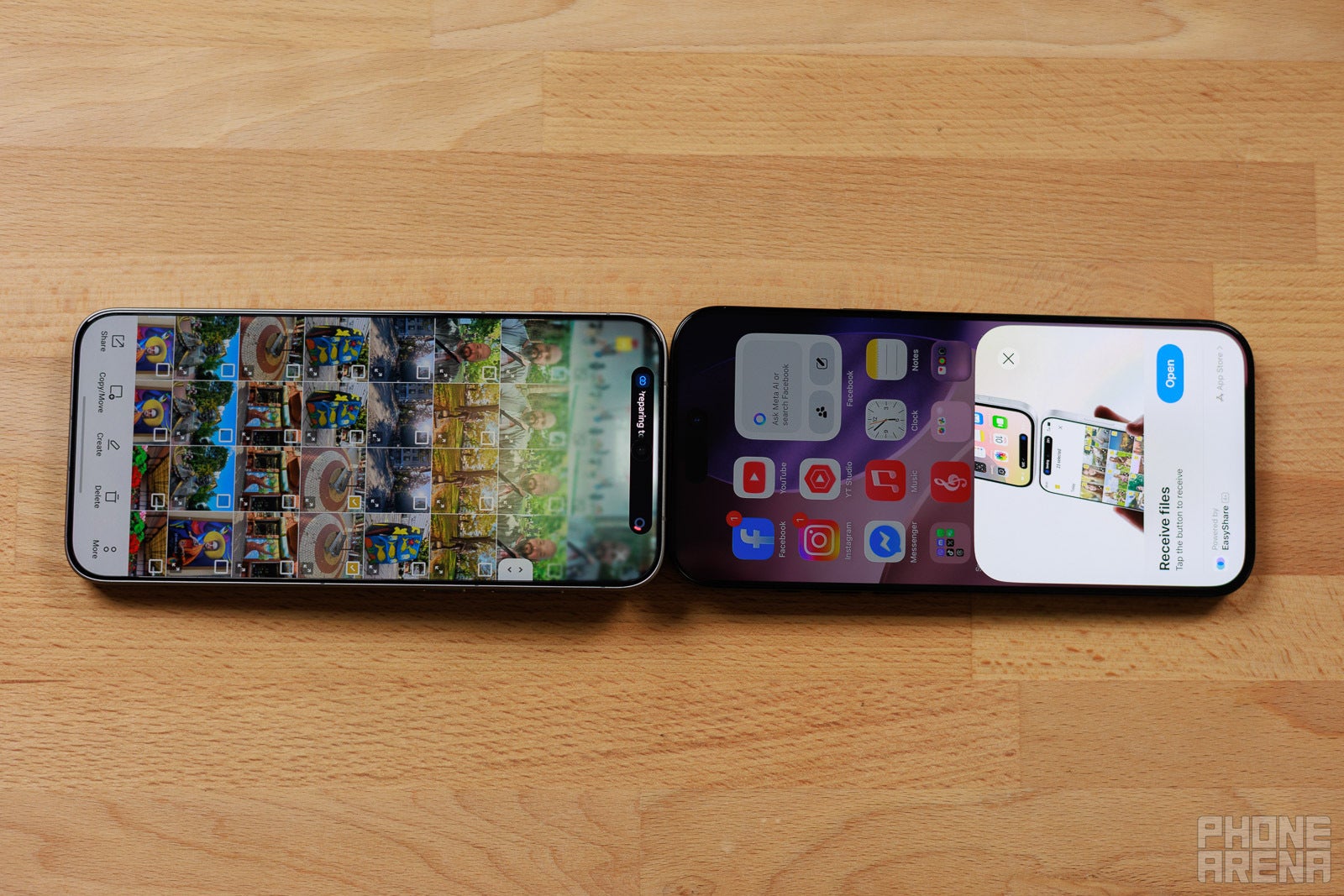
Vivo also has VivoShare which works a lot like AirDrop. Touch two phones, get a very familiar animation, share the file — that’s it. In fact, if an iPhone user downloads the app EasyShare, you can “AirDrop” to them with your Vivo phone. Tap the devices together, and they will make a personal Wi-Fi direct connection for the duration of the transfer.
The customizable lock screen of OriginOS 6 can have the same bold clock as on iOS, even the portrait effect where the clock can be partly hidden behind the subject of a photo. Plus widgets. Basically, you can make it look like the contemporary marketing images from any other competing brand.
Vivo X300 Battery
We can’t get the sweet 6,000+ mAh, but is it all that bad?
The international Vivo X300 comes with a 5,360 mAh cell – not the 6,000+ one that’s on the Chinese models. That’s just due to a plethora of shipping rules and regulations, so what can you do…
We did manage to get our hands on the 6,040 mAh unit, though, while our Pro model is the one with 5,440 mAh. So, for what it’s worth, our benchmark results of the Vivo X300 Pro may be closer to what you should expect with a Vivo X300 bought in Europe:
PhoneArena Battery Test Results:
It also charges super-fast, with its 90 W charger. The reason we are getting these large battery capacities in such small phones are recent developments in silicon anode batteries. With the help of new layering technologies, protective nano-coating, silicon-carbon matrix building, the material is tamed and made more “stable”.

You can also enjoy fast wireless charging — with the proprietary puck, the Vivo X300 can charge up with 40 W wirelessly.
Vivo X300 Audio Quality and Haptics
We get pretty good stereo sound from the Vivo X300. Well, not wide stereo — the smaller body just can’t throw the sound around a lot. But it’s surprisingly detailed and loud enough for most multimedia consuming.
The haptics are also great — quick, precise, reassuring vibrations whenever you scroll to the end, click, tap, or toggle.

Is it worth the price? Well, it definitely performs just as well, or outperforms its contemporaries in some categories. Its display is amazing, its camera is very good, its performance is up there with the best of them. Its stile is distinct — even if the software tries to copy iOS a little bit.
The only reason you wouldn’t go for the Vivo X300 straight away is concerns about software and support. Vivo promises up to 5 major Android updates, 7 years of security patches, with is pretty great. The question is how fast they would roll out. Then again, Samsung hasn’t been great with its own updates recently, so if you are used to the wait, this will barely be a concern.
By all means, if you are craving something different that performs well on every level — the Vivo X300 is a solid purchase.
👇Follow more 👇
👉 bdphone.com
👉 ultractivation.com
👉 trainingreferral.com
👉 shaplafood.com
👉 bangladeshi.help
👉 www.forexdhaka.com
👉 uncommunication.com
👉 ultra-sim.com
👉 forexdhaka.com
👉 ultrafxfund.com
👉 bdphoneonline.com
👉 dailyadvice.us